



 7 / 108

July 2020
World Cement
NEWS
5
ScrapeTec Trading GmbH discusses its
range of belt-preserving solutions
Anyone who, like the graduate engineer
Wilfried Dünnwald, looks back on many years
of working as a miner in a managerial position
knows the potential problems at transfer points
of conveyor systems first-hand. It makes no
difference in which industry the continuous
conveyor technology transports bulk materials.
It also makes no difference whether it works
underground or open pit. Spillages or dust
emissions are a nuisance for all industries. In
order to be able to contain both of these problems
permanently, and at the same time without an
exponential increase in maintenance efforts for the
skirtings of the transfers used for this purpose,
Wilfried Dünnwald considered technical principles.
This basic self-study of the options included a
strict exclusion procedure. What would have been
the point of developing a similar technical solution
to the ones already in place? The inventor’s own
specifications were therefore also concerned
with eliminating the well-known unfavourable side
effects of existing systems.
In order to break new ground in terms of wear
and tear, maintenance-free operation and service
life, only a contact-free method was ultimately
considered and the Venturi principle came into
focus. Based on this approach, numerous trials
followed that proved increasingly promising in
the course of the test runs and were additionally
fuelled by a corresponding customer order.
The prototype of the now patented AirScrape
was thus created in 2012, laying the foundation
for successful series production. This initial
success encouraged Wilfried Dünnwald to
take production into his own hands and thus he
founded ScrapeTec Trading GmbH in 2015. About
1000 belt transfers worldwide are protected by
ScrapeTec solutions. “One of the first series
production models of the AirScrape has been
in daily use in a dolomite plant since 2013 and
still performs its task reliably,” confirmed the
developer. Also, products that later followed the
AirScrape under the names of DustScrape and
TailScrape emerged from the specific needs
that became apparent to experts during on-site
installations or were formulated by customers.
“It is exciting to always be able to find a suitable
solution. In the meantime, we have found that
transfer points offer more positive potential for
this than was previously thought. Of course,
I am primarily interested in the technical side.
But now our products are also convincing
those responsible for controlling and experts for
occupational safety and health. This motivates the
entire workforce and makes them happy,” says
Dünnwald.
How the aspects of occupational safety,
health protection, efficiency, cost reduction,
environmental protection, energy saving – in
short: sustainability – are linked to the use of
an AirScrape system, is also regularly noted
by ScrapeTec Sales Manager, Thorsten Koth.
He said, “the AirScrape and its current product
siblings have developed solid self-propelling
tendencies and are in demand internationally. Our
participation in relevant trade fairs has significantly
increased the awareness of our products
internationally. This offensive approach has also
helped us to stabilise
the ScrapeTec presence
through newly acquired
local partners”.
In addition, there is a
lot of positive feedback
from users, “All of them
confirm how quickly the
implementation pays
off – if the operator
does not shy away from
the initially somewhat
higher investment costs.
The reward follows
immediately and comes
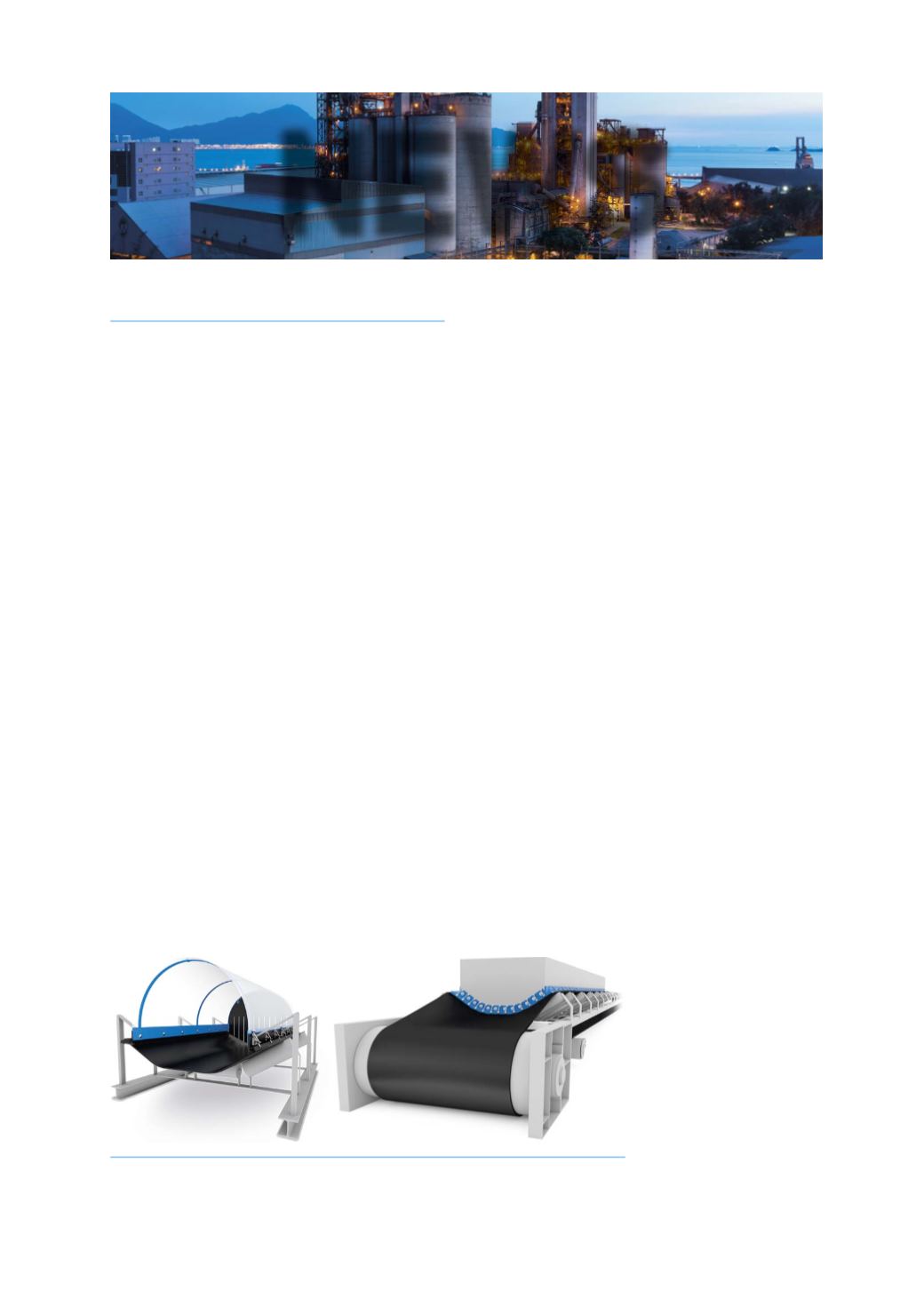
Like AirScrape, the TailScrape works according to the Venturi concept.
Dust generation and spills can be reduced by up to 100%. Images
courtesy of ScrapeTec.