


 124 / 140

November 2018
122 \
World Cement
CalPortland’s Rillito plant has a long history
of excellent performance in the health and safety
of its workforce. Starting in 2015, however, there
was a sharp increase in minor and major injuries
that resulted in a surge of employee lost days and
medical costs. The surge of reportable accidents
also prompted a vast increase in US Mine Safety
and Health Administration (MSHA) citations per
inspection. This trend continued through most of
2016. To understand the reason for the sudden spike
in employee injuries and citations, the company
started to look closely at the types of injuries and the
specific conditions that led to them. The investigation
showed no obvious trends; in fact, the only common
aspect was that the injured employees were all
unaware that a hazard existed before the incident
occurred.
Step 1: document and remove hazards
The company needed a proper system for employees
to document any hazards that they found every day,
before they started a task. The company had already
been using the MSHA-required workplace examination
programme. One noticeable characteristic that was
observed was that every department had their own
version, which was complicated and tedious. The
company assumed that this contributed in large part to
very poor participation by the employees. After a few
weeks of working with management and the safety
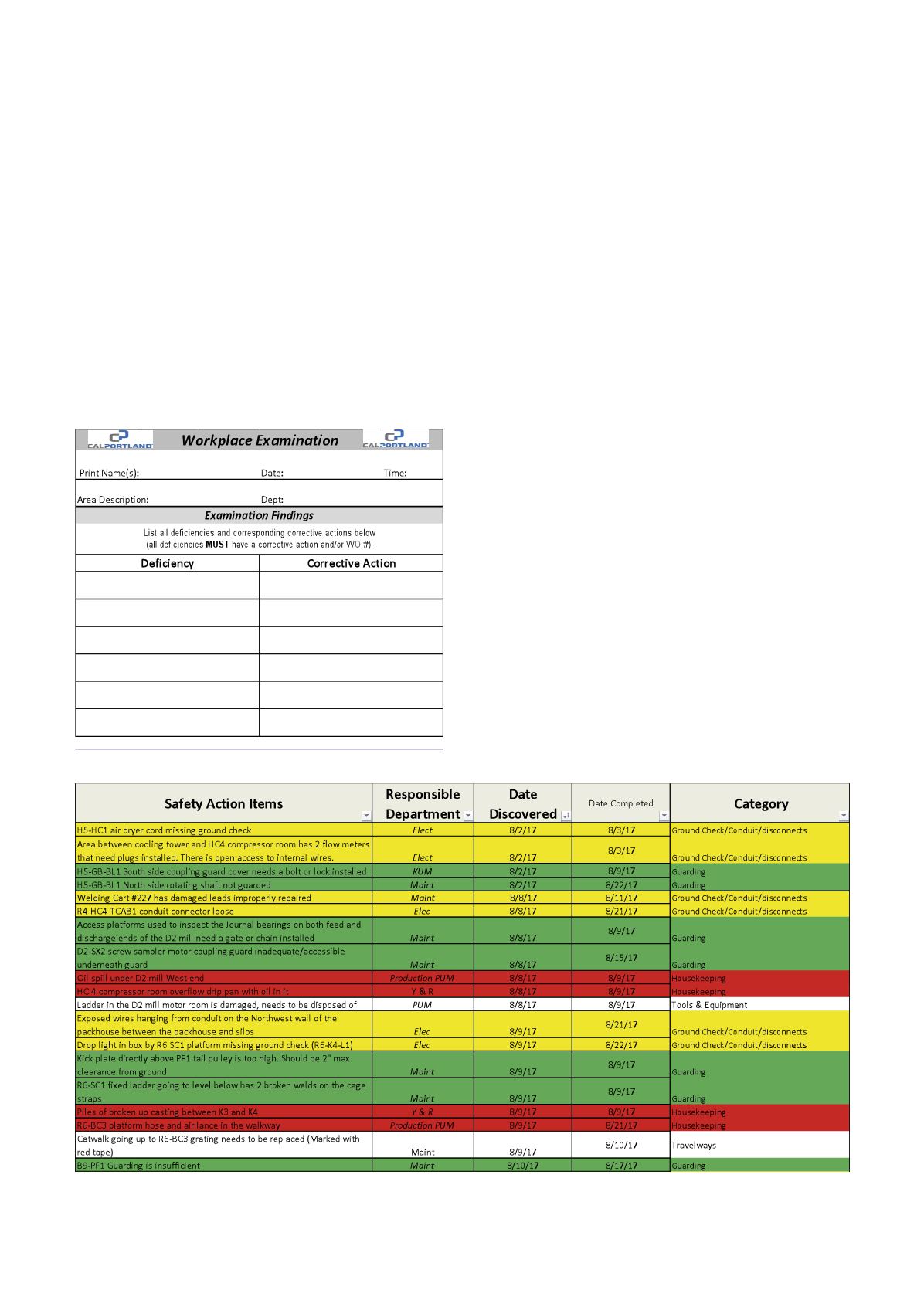
committee, a format was developed for a workplace
document that would encourage better participation,
that was easy to understand, and that took only a few
seconds to fill out (Figure 1).
The response by employees and results were
surprising. Dozens of forms were turned in each day,
with numerous hazards documented and abated.
Departmental communication was encouraged – and
experienced – for assistance in removing hazards and
reducing the opportunity for accidents. The new form
was well received by the workforce and seemed to
be working with one exception: during audits of the
active work areas, many issues were still identified
that were not noticed by the employees during their
examination. In retrospect, this may have been an
indication that employees were unaware of all the
conditions that could pose a potential danger to them.
How could they be required to know the hazards if
they had not been trained to recognise them? This led
to the creation of Hazard Awareness Training.
Step 2: Hazard Awareness Training
As a registered MSHA site, the company is required to
complete hazard training annually. The Rillito plant
had been contracting this training to a subcontractor.
Record hazards
Evaluate trends.