



 62 / 84

North America 2018
60 \
World Cement
used, some are not relied upon for storage, and
others were used in the past but their use so badly
damaged the group that they have been abandoned.
Some silos are filled using gravity only, while others
have material pumped to them with the assistance
of pneumatics. Foundations vary depending on the
locale: many cement plants are built near a quarry,
with limestone close to the surface, while many
terminals are built on or near water, which means
they are built upon soil that the river has deposited
over thousands of years.
The point is clear: no two silos/silo groups are
alike. Similarly, there are many possible issues with
silos. Like a squeaky bearing that needs grease
or a chain that wears over time, they require
maintenance. And just as a maintenance programme
is used for mechanical equipment, the same is
recommended for silos. Further, when a silo is
communicating its concern, attention should be
given, just like when a conveyor keeps misaligning.
Below are a few of the more common issues that are
observed in existing silos during an inspection, along
with some guidance on tell tale signs of wear, and
possible repairs to mitigate the damage.
Asymmetric flow
Mention this to any experienced silo engineer and
their eyes may light up, and they will excitedly talk
about the causes, effects, and cures for asymmetric
flow. In general, asymmetric flow is any flow of
material that is not concentric and vertical. Typically,
the best scenario for material withdrawal from a silo
(from the perspective of a structural engineer) is a
conical, singular point at the centre of the silo.
When material is reclaimed from a silo, a flow
channel typically develops. This flow channel is the
only material moving toward reclaim, while the rest
of the material is static. The pressures in this funnel
of moving material are much lower than the pressure
in the static material. When a flow channel strikes
the silo wall, where the remainder of the material
around the perimeter is static, this difference in
pressure can cause bending or flexure. This bending
tends to cause the silo wall to flex inward at the
centre of the flow channel. This flexure almost always
exceeds the tension that would result if the silo was
filled and material withdrawn from the centre. This
overstress has caused significant damage and even
catastrophic failure of silos around the world. Some
causes of asymmetric flow and preventions include
the following:
z
Non-concentric withdrawal points: do not use
these. Do not modify existing hoppers, etc. to
add an air slide/similar out of the side of the silo.
z
Improperly designed withdrawal chutes or
improper use of gates for flow control: properly
design chutes, with skirting, gates, etc. that fit
the material being reclaimed.
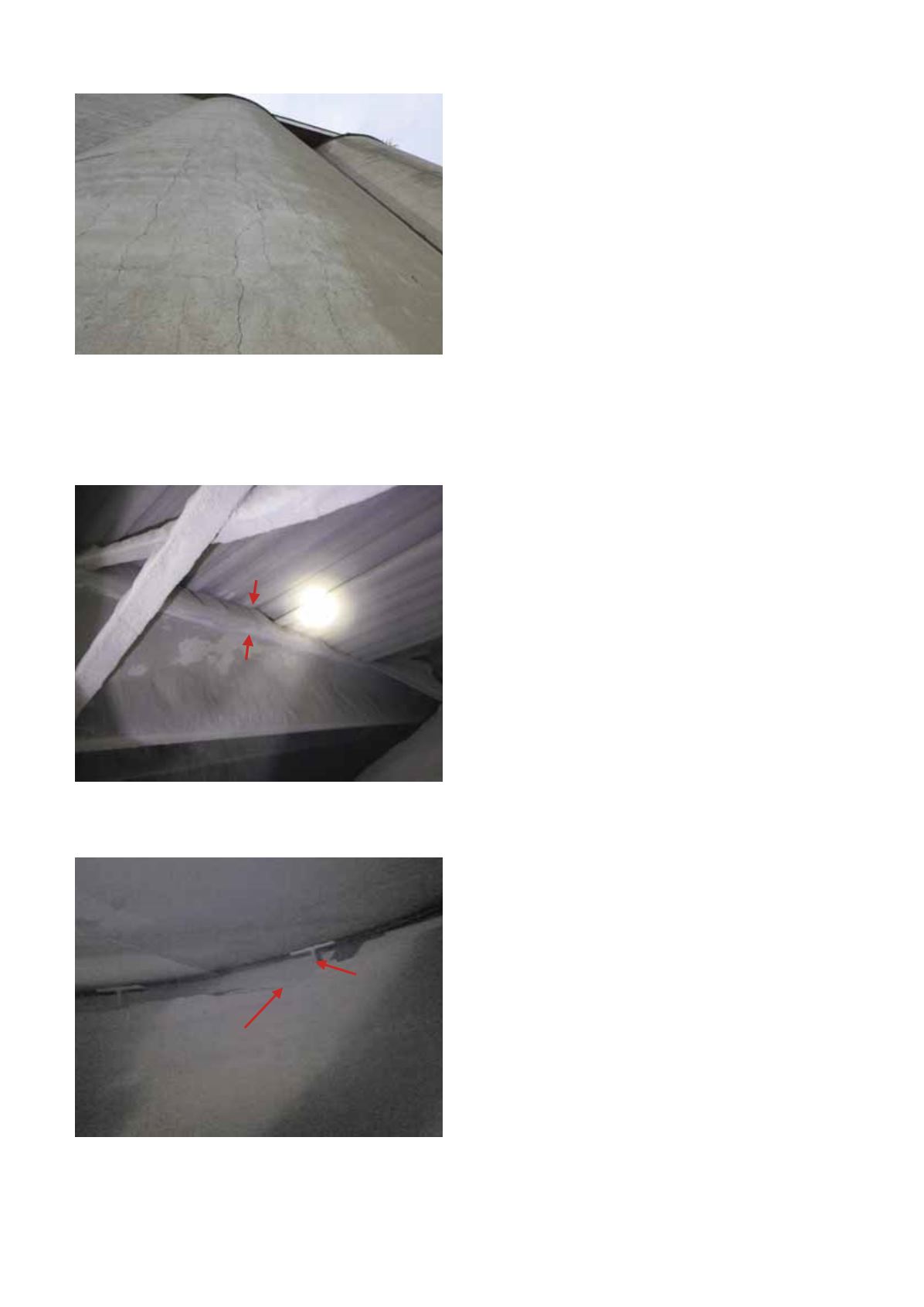
The vertical cracks on the exterior face of this silo are
a manifestation of the use of plant air to assist with
reclaim. When the plant air is left running, the entire
cylinder of material in the silo fluidises and causes
overpressure on the silo walls, leading to the cracks
observed.
Overfilling of silos can lift the roof slab off the roof
support beams, damaging the concrete roof slab and
compromising the support for the roof slab.
There are many variations in how a hopper is connected
to the silo wall, and some are inherently better than
others.