


 63 / 84

z
Blinded or improperly working air pads:
properly maintain air pads and piping.
Pneumatics
One problem is the fact that pressurised air is being
blown into a space that is restricted. Pressures used
regularly exceed 20 pounds per square inch. This
equates to a pressure of nearly 3000 pounds per
square foot (psf). The weight of most reinforced
concrete silo roofs is less than 100 psf. While the
pneumatic issue is one that is both a pressure and
a volume one, it is simple to see that unregulated
pressures in transporting material could cause issues.
Most silos/silo groups have a dust collector on the
roof. Often, this is sufficient for helping to regulate
of assist in releasing pressures, but many dust
collector manufacturers state that their equipment
should not be relied upon for pressure relief. The
installation of a pressure relief system, including
pressure relief valves, typically requires only a small
investment.
Another issue with the use of pneumatics is
the improper use of air to assist with reclaiming
material. It is standard practice to use pressurised
air through air pads to fluidise the bottom few feet
in a silo, especially of a powdered material, such
as kiln feed or finished cement, when discharging
that material from the storage space. However,
issues develop over time. Either air pads clog, an
insufficient amount of air is provided, or other
reasons prevent proper flow. Typically, facility
personnel solve the problem operationally by using
plant air, and often do not close the valve that
supplies it when reclaim operations are not running.
Two initial problems arise. One is the clogging of
air pads. If all air pads are not operating in a similar
manner, then the flow channel that develops can tilt,
leading to asymmetric flow issues (see above). Another
is when personnel use plant air and leave it supplied
to the material in the storage space. This can lead
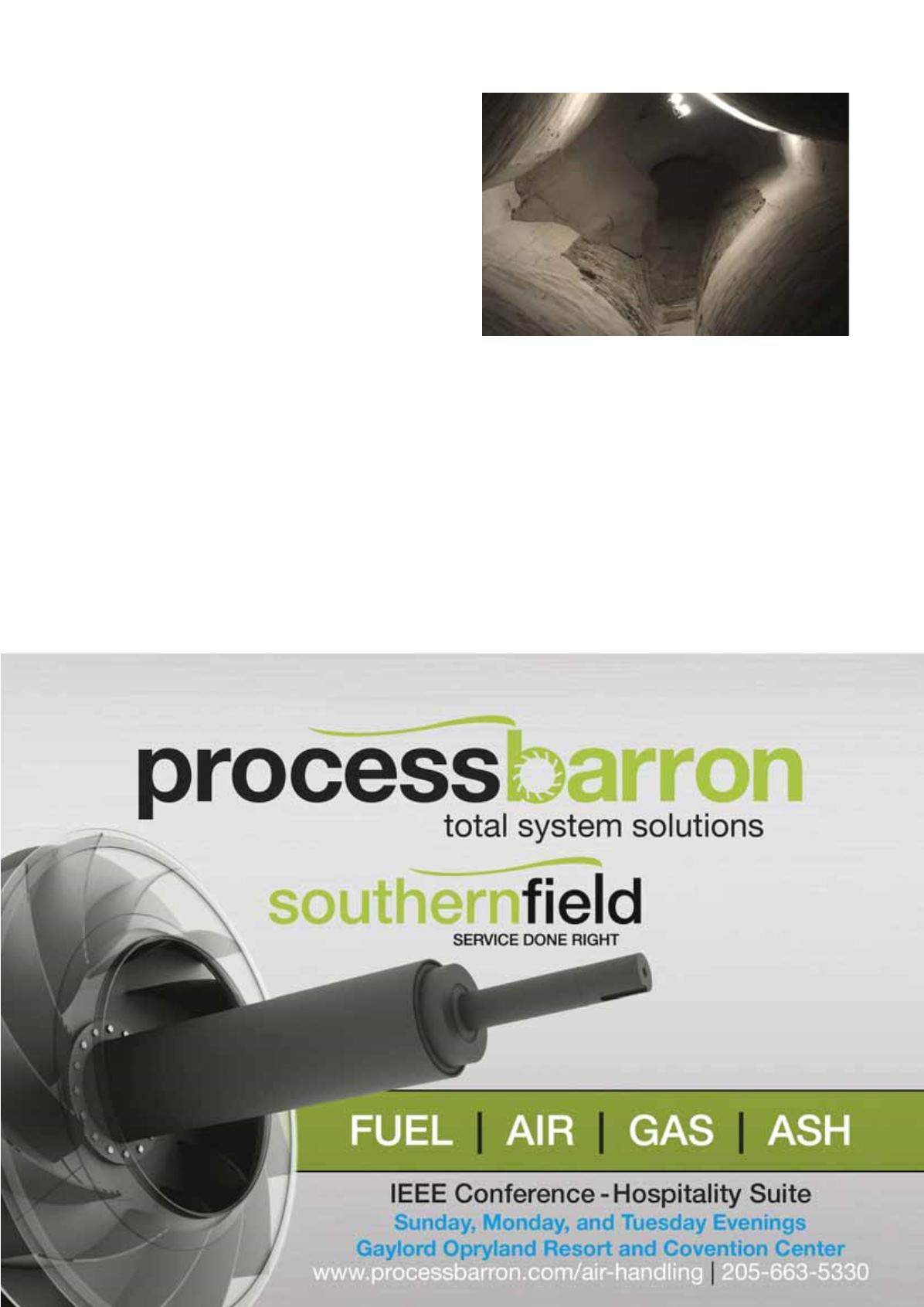
The use of this interstice has led to an overstress in the
wall, leading to the loss of a significant portion of the
wall section, leaving reinforcement exposed and the
structure compromised.