



 78 / 84

North America 2018
76 \
World Cement
Considerations affecting the installation position
of a belt cleaner include the following:
z
Cleaner design.
z
Tensioner and mounting requirements.
z
Bolting or welding the cleaner in place.
z
Installation on chute wall or hung from stringer.
z
Position of cleaner to avoid conveyor structural
beams, bearings, and drives.
z
Support for the cleaner.
z
Access for maintenance.
Inspection
Since many cleaners malfunction due to lack of
informed maintenance, access for inspection,
cleaning, and service is critical. After startup, it may be
impossible to correct access and location problems.
It is impractical to try and maintain a cleaner
buried in an inaccessible location, but this is often
the case when attention to detail is missing in the
original design. Thoughtful location of the work
platform to allow mounting cleaners in a preferred
location and providing for ergonomic maintenance
will greatly improve the chances that the cleaner will
be inspected frequently.
Maintenance
Even the best designed and most efficient of
mechanical belt cleaning systems requires periodic
maintenance and adjustment to reduce performance
deterioration. Tensioning of belt-cleaning systems
minimises wear on the belt and cleaner blades,
helping to prevent damage and ensure efficient
cleaning action.
Belt cleaners must be engineered for durability
and simple maintenance, and conveyors should be
designed to enable easy service, including required
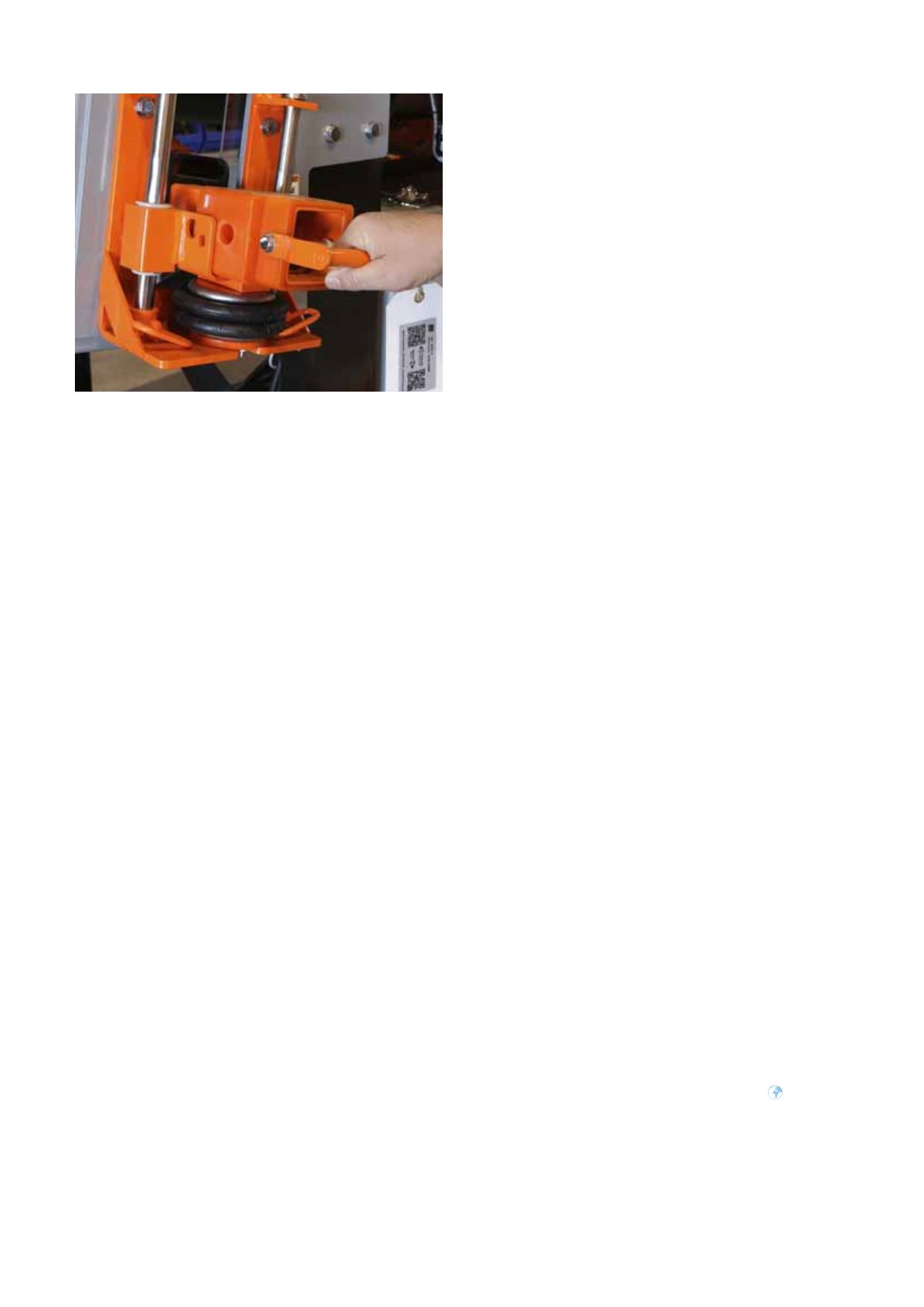
clearances for access. ‘Worker-friendly’ maintenance
is more likely to be performed on a consistent basis
(Figure 7).
Elements that can be incorporated into
a conveyor belt cleaning system to improve
maintenance procedures include the following:
z
Adequate service access with ample clearances,
as recommended by CEMA.
z
Access windows with easy-to-operate doors
installed on both sides of the pulley, in line with
the axis of the belt cleaners.
z
Cleaning elements that slide out for service,
without requiring mainframe removal.
z
Components, including blades and mainframe,
that resist corrosion and abuse.
z
Components that allow quick performance of
required adjustment and service with simple
hand tools.
z
Automated load sensing and blade tensioning.
In a survey of factory maintenance technicians,
respondents estimated that only about 20% of all
conveyors have the proper cleaning systems and, of
those, just 20 − 25% are well maintained.
The problem is that most in-house inspections
are limited and, when they do occur, they tend to
be casual reviews by people who are not highly
trained in how to maintain the cleaners. Most
managers will feel this is a simple task that should
be done in-house. However, the truth is that cleaner
maintenance is rarely a priority, reinforcing the
benefits of automated tensioning. Some equipment
manufacturers offer factory-direct service from
professionals who are aware of the hazards, have
the appropriate tools, and are trained in safe and
proper service, reducing the workload on customer
personnel and improving cleaning performance.
Conclusion
The use of factory-trained and certified speciality
contractors can help ensure that belt cleaner
maintenance is done properly and on an appropriate
schedule. Further, experienced service technicians
often notice other developing system or component
problems that can be avoided if they are addressed
before a catastrophic failure occurs, helping conveyor
operators avoid potential equipment damaging and
expensive unplanned downtime.
By setting the cleaning goal necessary for each
individual operation and purchasing a system
adequate for those conditions, as laid out in CEMA
standards, it is possible to achieve carryback control
and yet obtain long life from belt cleaners. The
bottom line is that properly installed and adjusted
belt cleaners help minimise carryback and spillage,
reducing risk and overall operating costs.
About the author
Alan Highton is a National Sales Manager and Todd
Swinderman is the retired President and CEO of Martin
Engineering.
Figure 7. Ease of service should be a key element in any
belt tensioning system.