



 82 / 140

November 2018
80 \
World Cement
too complicated for a human brain to juggle. Even
rudimentary planning tools are rarely sufficient
for organisations under pressure to distribute
bagged and bulk products to locations ranging
from construction sites to builders’ merchants,
distribution centres, and retail parks. Then there
are access or compliance restrictions to factor in.
Transport regulations, such as the London Lorry
Control Scheme, restrict the time of day that larger
vehicles can be used in urban areas. All these
parameters need to be considered, along with the
suitability of vehicles and the availability of drivers
during the planning process.
Good transport planning is critical to a logistics
operation, leading to efficient routes, which fulfil
a day’s order requirements, as well as accurate
journey and arrival times. Transport planners who
use advanced routing and scheduling software can
manage a wide range of parameters, including
customer locations, delivery quantities, product
types, time windows, vehicle types, and driver
shift details. This approach creates achievable and
cost-efficient schedules within a matter of minutes.
Armed with the right tools for the job, transport
planners can also be confident that they are
selecting the most appropriate vehicle and the best
driver available for each trip. The ability to route
plan at this individual driver level allows the planner
to consistently produce schedules that maximise
driver utilisation – and provide fair workloads
for driver teams. The result is more accurate time
windows for customer deliveries but also operational
savings. Getting this right means that a business
can provide a better customer experience without
sacrificing profit.
Keeping connected
With the growth in connected technology, it is
increasingly possible to use devices, software,
and systems that communicate with each other to
create a joined-up approach that provides both
transparency and control over a live transport
operation. The integration of vehicle tracking,
routing, and scheduling software allows the
transport office to monitor real-time performance
against the plan. The added visibility of what is
happening out on the road means unnecessary costs
and poor customer experience can be avoided – or at
least mitigated.
Transport plans have traditionally been difficult
to enforce during execution, so the ability to
identify any deviations from the plan in real-time
can make a huge contribution to keeping overheads
under control. Accurate planned-versus-actual
reports and route replays can be used during
debriefs at the end of each shift to better engage
with drivers, resolve any immediate issues, and
identify areas of improvement.
With the availability of this real-time data,
transport planners also have the insight to review
and refine the data they are using to build their
plans. For example, is the time allocated for regular
delivery locations or unloading standard products
accurate? Using this information, alongside key
performance indicators, can help to unearth
hidden inefficiencies or operational issues that are
causing unnecessary cost. By understanding the
effectiveness of a current route plan, it is possible to
identify potential changes to optimise the transport
operation moving forward.
Customer expectations
Paragon’s recent customer survey showed a shift in
what people are looking for from transport services,
with a staggering 85.6% saying that customer
expectations had increased in the past 12 months.
The overriding reason behind the increasing
customer expectations was the request for greater
levels of visibility and accuracy, which included
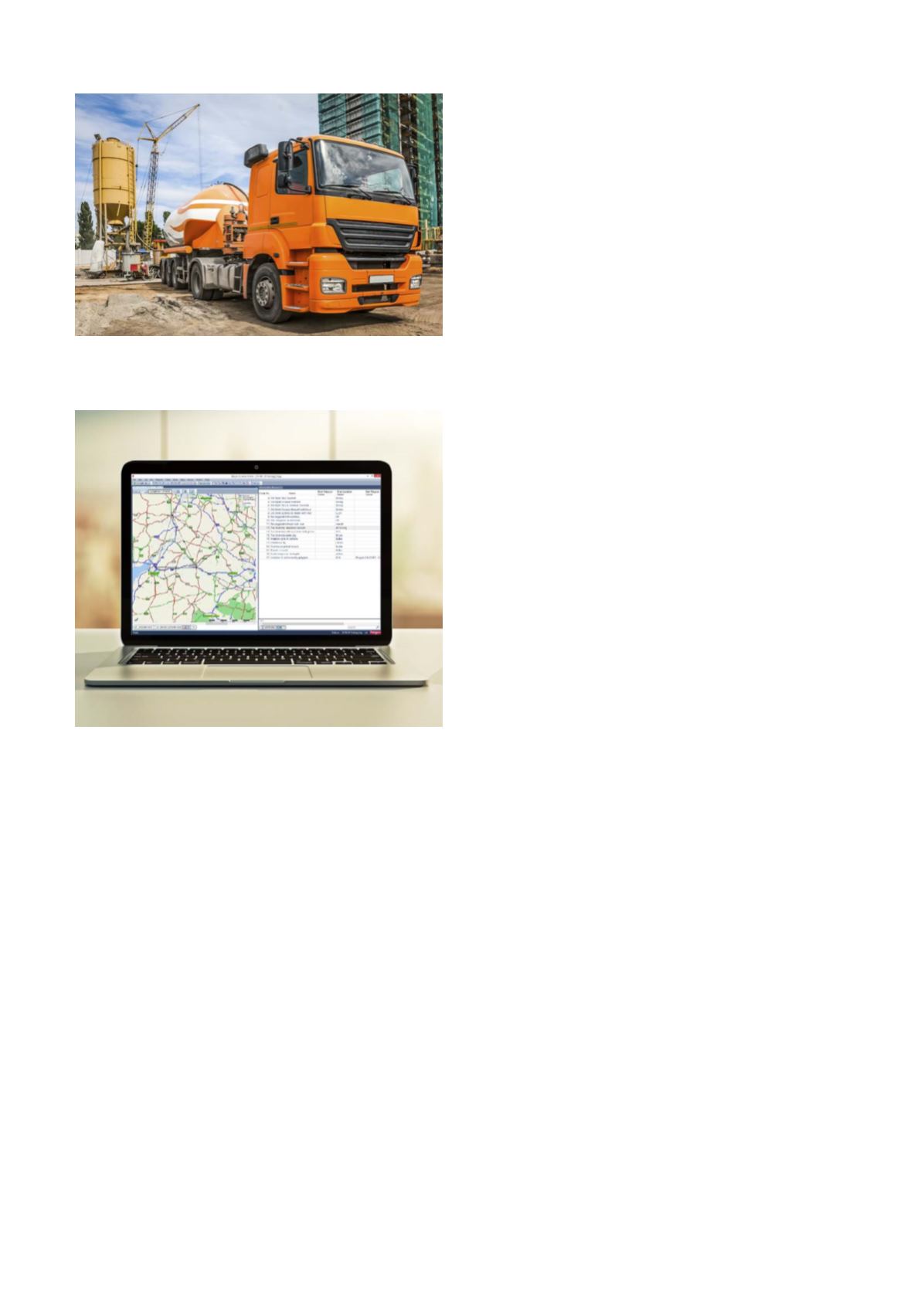
Routing and scheduling software can reduce transport
costs and enhance service delivery.
The cement industry currently faces major financial
pressures, so needs to look at ways of reducing
significant overheads, such as transport.