



 78 / 140

November 2018
76 \
World Cement
manual handwheel, the operation is much easier than a
typical switching valve. Pinch valves can be automated
with a pneumatic or electric actuator.
Many cement plants use manually operated
valves for switching. The use of actuation would
result in both safer and easier operation. However,
pneumatic actuators may not be preferred in cold
weather environments; if condensate is present in the
pneumatic air system, then the actuators may freeze
in winter months.
Feeding and dosing liquids and
chemicals
For chemicals and liquids feeding and dosing in general
applications in cement plants, there are a lot of
different styles of pumps that may be used. Some of the
most common considerations are the flow and pressure
the pump will be required to produce. The pump must
also be mechanically suitable for the environment and
be built of materials that are resistant to attack from
the chemicals that it may be in contact with.
One style of pump that has been successfully used
by numerous cement manufacturers is peristaltic.
These pumps are ideal for metering and dosing
various chemicals in cement manufacturing. One
key application is the delivery of a grinding agent
to the process. With peristaltic pumps, the tube and
fittings are the only components in contact with the
medium. There are numerous tube sizes and materials
that are able to handle a wide variety of chemicals.
New, advanced peristaltic metering pumps can accept
4 – 20 mA control signal inputs. They can also have
a LED push button interface for local control, deliver
4 – 20 mA outputs of operating speed, have IP 66
enclosures, can control a 2500:1 turndown, and use
patented tube leak detection. These units can reliably
meter the grinding agent to the process.
Many cement plants require multiple pumps for
the delivery of a grinding agent. Some of these plants
have opted to purchase packaged pump systems.
The idea is that a group of pumps are mounted on
a spill containment base together. All auxiliaries,
such as pressure relief, pulsation dampening, safety
shut-off, and control panels, can be incorporated in
the packaged systems. The general idea is that they
acquire a complete plug and play system: just connect
the piping and electrical connections and the pumps
can start delivery of the desired medium. Part of the
concept of these systems is to have the pumps situated
in an ideal environment for the pumping. These
packaged systems limit the mistakes that can be made
during contractor installation. The pumps are packaged
with the appropriate recommended auxiliaries to
maximise chances of survival. The systems are factory
acceptance tested before delivery to the site.
Digitalisation of assets
Virtually any asset that has analogue or digital inputs
can use advanced monitoring systems to better
maintain assets, reduce operating costs, and minimise
downtime. Ball mills, for example, could be monitored
for wear lining deterioration, bearings could be
monitored for increased vibration, and motor drives
and gear boxes for vibration, temperature, amp draw,
and numerous other variables that could provide vital
information on the ball mill’s health and need for minor
repairs. Some of the advantages of Industrial Internet
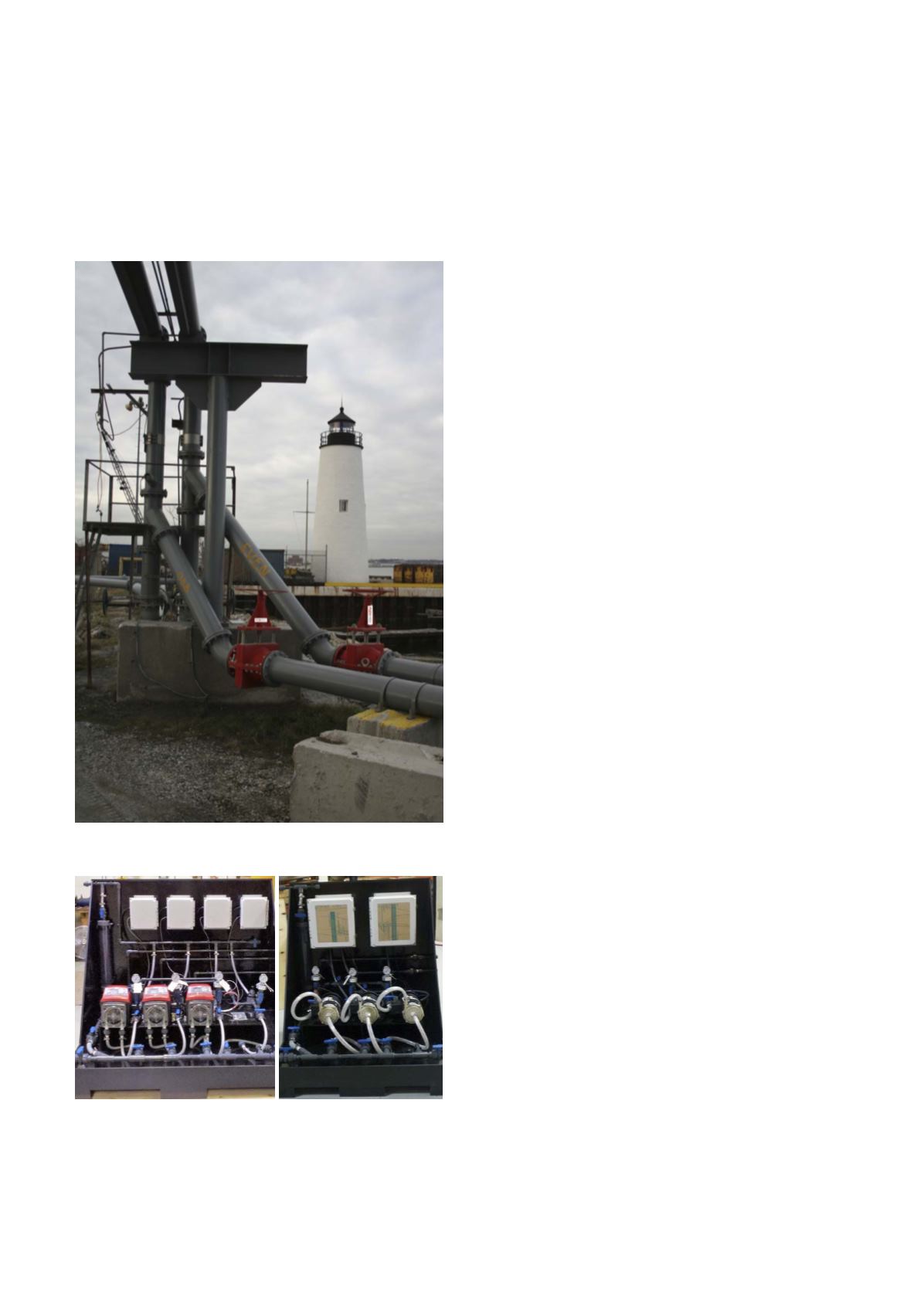
Two packaged pump systems by Flowrox. Both systems
were delivered to a US-based cement plant. The system
on the right has Flowrox LPP-M peristaltic pumps for
delivery of the grinding agent. The system on the left
has centrifugal pumps for the delivery of water.
Flowrox enclosed pinch valves at a cement ship
unloading facility in Baltimore, Maryland, US.