



 38 / 108

planning and initial construction stages, rather than
retrofitting the system later. The added engineering
cost of PtD is often less than an additional 10% of
engineering but has enormous benefits in improved
safety and increased productivity.
The cost of PtD initiatives after initial construction
can be three to five times as much as when
the improvement is incorporated in the design
stage. Retroactive improvements can cost far
more, and are sometimes impossible due to
designed-in restrictions or space limitations. This
cost of retroactive improvements is reduced by
implementing modular designs with plenty of
space to work and expand. The biggest cause
of expensive retroactive improvements is cutting
corners initially by seeking lowest-bid contracts.
Low-bid process and life cycle cost
Although the policy is generally not explicitly stated
by companies, the low-bid process is usually
an implied rule that is baked into a company’s
culture. It encourages bidders to follow a belt
conveyor design methodology that is based on
getting the maximum load on the conveyor belt
and the minimum compliance with regulations
using the lowest price materials, components and
manufacturing processes available.
Maximising the volume of cargo and minimising
the price of the system usually means choosing
the narrowest feasible belt operating at the highest
speed possible. This leaves little margin for error
and in many cases results in chute plugging,
excessive spillage and reduced equipment life.
According to conveyor expert and P.E.,
Todd Swinderman, “When companies buy on
price, the benefits are often short-lived, and costs
increase over time, eventually resulting in losses.
In contrast, when purchases are made based on
lowest long-term cost (life-cycle cost), benefits
usually continue to accrue and costs are lower,
resulting in a net saving over time.”
4
The art: Design hierarchy
To safely maximise production, designers and
engineers are urged to approach the project with
a specific set of priorities. Rather than meeting
minimum compliance standards, the conveyor
system should exceed all code, safety and
regulatory requirements using global best practices.
By designing the system to minimise risk and the
escape and accumulation of fugitive material, the
workplace is made safer and the equipment is
easier to maintain.
Life cycle costing should play into all component
decisions. Be aware of specifications on project
components that state ‘specific manufacturer
name/or equal.’ Vaguely written ‘or equal’
specifications are there for competitive reasons
and allow contractors to purchase on price
without adequate consideration for construction
or performance. Rather, buying on ‘life cycle cost’
or ‘engineer-approved or equal’ and anticipating
the future use of problem-solving components in
the basic configuration of the conveyor provides
improved safety and access, without increasing
the structural steel requirements or significantly
increasing the overall price. It also raises the
possibility for easier system upgrades in the future.
The ability to accommodate future increases in
capacity can be included in the original design,
expanding options and reducing future modification
costs.
Best practices
Using the hierarchy of controls along with the
design hierarchy, engineers will be able to construct
an ‘evolved basic conveyor’ that meets the needs of
modern production and safety demands. There are
several key points that should be considered when
designing a safe and efficient conveyor system.
Components of an Evolved
TM
Basic Conveyor
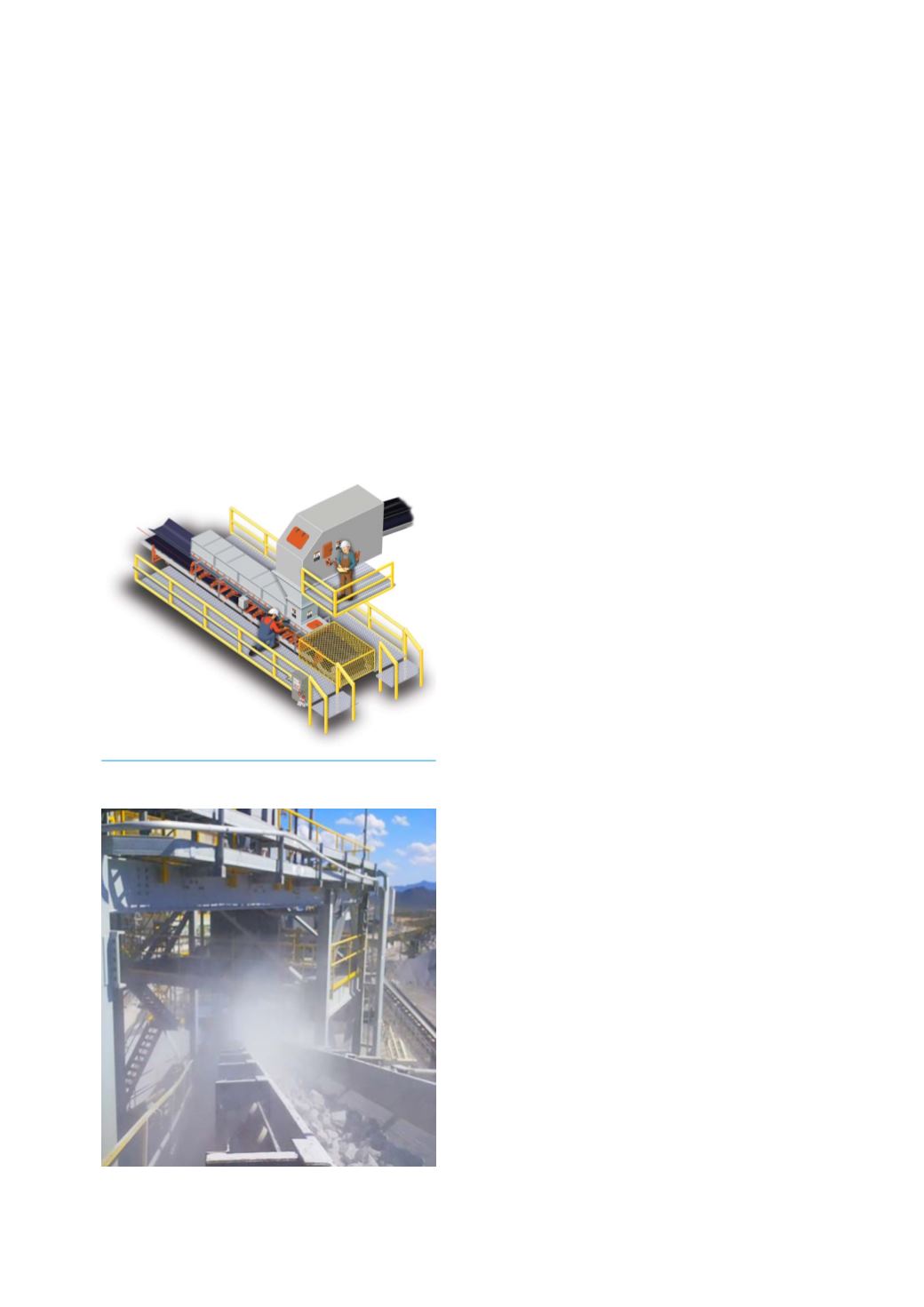
facilitate operations, maintenance and safety.
Raw bulk material drops onto a moving
conveyor belt, creating dust and spillage.
36
World Cement
July 2020