



 40 / 108

The mounting brackets for flow aids can be
included in the original design without a noticeable
price increase but greatly reduce retrofit time and
cost when they are needed.
To assist with the installation of problem-solving
components without welding or cutting, consider
employing a buildup-resistant stringer in the load
zone. A similar structure should be planned for
the discharge zone to accommodate a cleaning
station. To aid in this and all future maintenance,
a belt splicing and repair station improves belt
maintenance and reduces outage time. Finally,
it is recommended to minimise conduit in critical
maintenance areas, i.e. the load and head
zones, and re-route the conduit overhead. A
flexible conduit should be used to connect to the
components in these zones.
Case study
A mine in north central Mexico was experiencing
excessive spillage and dust emissions at the
loading zone of its tower-mounted conveyor
transporting raw gold, silver, zinc oxide, copper,
lead, molybdenum and sulfides. Despite installing
various transfer and loading chute components
from a previous supplier, workers found that dust
filled the tower and chunks of raw material 2 – 3 in.
(51 – 76 mm) in diameter spilled from the transfer
chute onto the stairs, partially blocking access to
the area and creating a potential workplace hazard.
Twice per month operations had to be disrupted for
12 – 24 hours so that a 4 – 5 person team could
clean the spillage and return it to the cargo flow.
Cleanup and downtime raised the cost of operation
and lowered efficiency.
Technicians from Martin Engineering Mexico were
invited in and, after a thorough inspection, they
designed a conveyor plan based on the principals
of ‘production done safely’. It addressed all aspects
of the bulk handling process for properly guiding
the cargo through the transfer chute. Impact
cradles centred the material and promoted belt
health. Slider cradles improved safety for external
maintenance. The project also included skirting
and dust bags to contain emissions and spillage
throughout the settling zone. Strategically placed
tracking equipment aligned the belt along the entire
path. Heavy-duty primary and secondary cleaners
that slide in and out for service were installed at the
discharge zone to reduce carryback and promote
safer blade replacement. The entire system was
designed with innovative safety features and ease
of maintenance in mind. Each of the components
work together to deliver a comprehensive bulk
handling solution that promotes efficiency and a
safer workplace.
Following installation, fugitive material was
significantly reduced and spillage no longer blocked
access to the area. The air around the transfer point
and throughout the tower was much clearer. “We no
longer need scheduled shutdowns just for cleaning,”
said an Operations Manager. “We’re very happy
with the work done.” The customer cited the expert
service, a thorough understanding of the mine’s
needs and the quality of the equipment.
Conclusion
Engineering safer conveyors is a long-term
strategy. Although design absorbs less
than 10% of the total budget of a project,
engineering/procurement/construction management
(EPCM) services can be as much as 15% of
the installed cost of a major project. Additional
up-front engineering and applying a life cycle-cost
methodology to the selection and purchase of
conveyor components proves beneficial.
By encouraging the use of the hierarchy of
controls at the planning stage, along with the
design hierarchy at the design stage, the installation
of an evolved basic conveyor can be achieved.
The system will likely meet the demands of modern
production and safety regulations, with a longer
operational life, fewer stoppages and a lower cost
of operation.
References
1. Conveyor Accident Database, OSHA, US Dept.
of Labor. Washington, DC. (2018), https://www.
osha.gov/pls/imis/AccidentSearch.search?acc_
keyword=%22Conveyor%20Belt%22&keyword_list=on
2. ‘Foundations for Conveyor Safety’, Ch. 31, pp.
404 – 440, Martin Engineering, Worzalla Publishing
Company, Stevens Point, Wisconsin, (2016), https://www.
martin-eng.com/content/product/690/safety-book3. HOWARD, J, M.D., ‘Prevention through Design: Plan
for the National Initiative’, National Institute of Occupational
Safety and Health (NIOSH), U.S. Centers for Disease
Control (CDC), Department Of Health And Human Services.
Washington, DC. (2010).
https://www.cdc.gov/niosh/docs/2011-121/pdfs/2011-121.pdf
4. SWINDERMAN, R. T., ‘The Economics of Workplace
Safety: Putting a price on material handling mishaps’,
Coal Age
, Vol. 123, No. 3, pp. 28 – 31, April, (2018).
https://www.coalage.com/features/the-economics-of-workplace-safety/
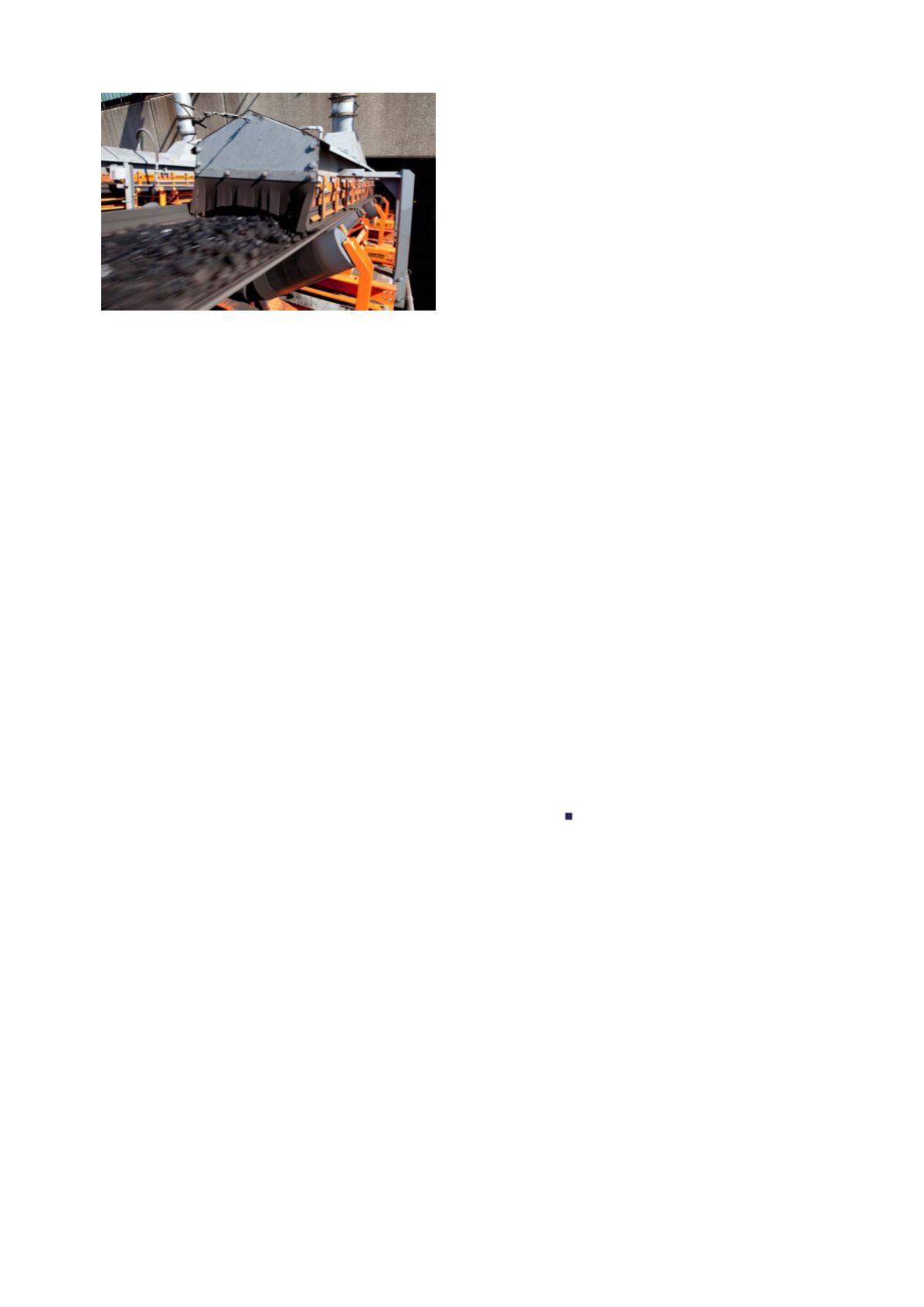
The reconfigured conveyor controls emissions
for improved safety and easier maintenance.
38
World Cement
July 2020