BMHR 2016
46 \
World Cement
ROCKY is the powerful new DEM program that produces
realistic-looking particle shapes and accurately simulates
their behavior within bulk materials handling systems.
Using ROCKY, a flow simulation can be obtained
for potential issues with blocking, spillage, product
degradation, dust, belt tracking and liner wear.
Another complementary technique is to make the
discharge chute in a reduced scale of 1:10, construct the
model in transparent acrylic plates and test the material
behaviour inside the chute. A video can be made during
the material discharge to show its movement and what
does or does not work. With these two tools, is possible
to design and fabricate an optimised discharge chute,
avoiding operational and costly problems during the
conveyor operation.
ESI – Energy Saving Idler
One of the main targets of the belt conveyor design is to
find ways to reduce power consumption. After extensive
studies, Metso Minerals developed an efficient device to
promote power reduction in belt conveyors through a
patented energy saving idler or ‘ESI’ (Figure 3). The main
objective is to consider the frictions between the belt and
material, as well as the belt, and conveyor rotating parts,
which resist movement.
The resistance is comprised by internal frictions
caused by the material during the belt movement, rubber
indentation in contact with the rolls. The wider the spacing
of the idlers, the larger the belt sag, and thus the bigger
the losses caused by belt undulations. The indentation
resistance is an exponential function of the contact
pressure. The friction in the bearings and seals are directly
proportional to the shaft diameter. The larger the diameter,
the greater the loss will be. It is important to note that in
the conventional conveyor, the idlers are formed by means
of three rolls. The central roll takes at least 70% of the total
material load; and as the standardisation of all rolls are
identical, the lateral rolls are oversized.
The ESI design came from the following observations.
In place of the central roll, a balancing roll was fitted
with two rolls seated at its ends. In this way, the central
load was distributed on a pair of rolls, decreasing the loss
caused by indentation. The span of the belt support was
decreased, reducing the amount of undulation. The lower
load per roll allows the bearings to have a smaller dia.
The energy saving idler, developed by Metso, is
backed by significant research, including laboratory tests
and site measurements. This provides users with reliable
components and enables Metso to give a guarantee
regarding the power savings that can be reached.
Proper design of engineered pulleys
A recent solution to replace the conventional pulley
construction was achieved with the development of the
new shaftless pulley. This arrangement consists of two
turbine disks with protruding shaft ends made of cast
alloy steel and disks welded to a pulley carcass.
Using finite elements analysis and determining the
internal stresses acting on each pulley component, such
as belt tension, wrap angle, rotational speed and shaft
dimensions, a good and reliable design was attained.
This product is a highly engineered pulley, which is
designed and balanced as an integral unit, capable of
resisting any conveyor belt tensions.
Belt cleaning devices
Metso Minerals has developed a new belt cleaning
product range called ABC – Absolute Belt Cleaning. The
goal was to provide a technical solution, which would
give the products high efficiency, long wear life and a
minimal need for maintenance. The new products have
been tested for a long time – even under tough conditions
– and have proven to meet the very high goals set at the
start of the development process. The parameters that
affect efficiency include the scraper-to-belt contact angle,
the contact area, and the contact pressure per surface
unit. On the new ABC scrapers, these values are kept as
close to ideal as possible throughout the wear life of the
blades. As a result, these scrapers show a constant cleaning
efficiency from the time of installation throughout their
wear life. To further increase the efficiency of the scraper,
the blades are divided into segments, which can move
independently from each other. Reduced spillage leads to
less wear on the conveyor and its components as well as
savings in clean-up costs.
The ABC scrapers feature polyurethane blades,
enabling an aggressive scraping angle to be used without
damaging the belt. The design of the blades eliminates
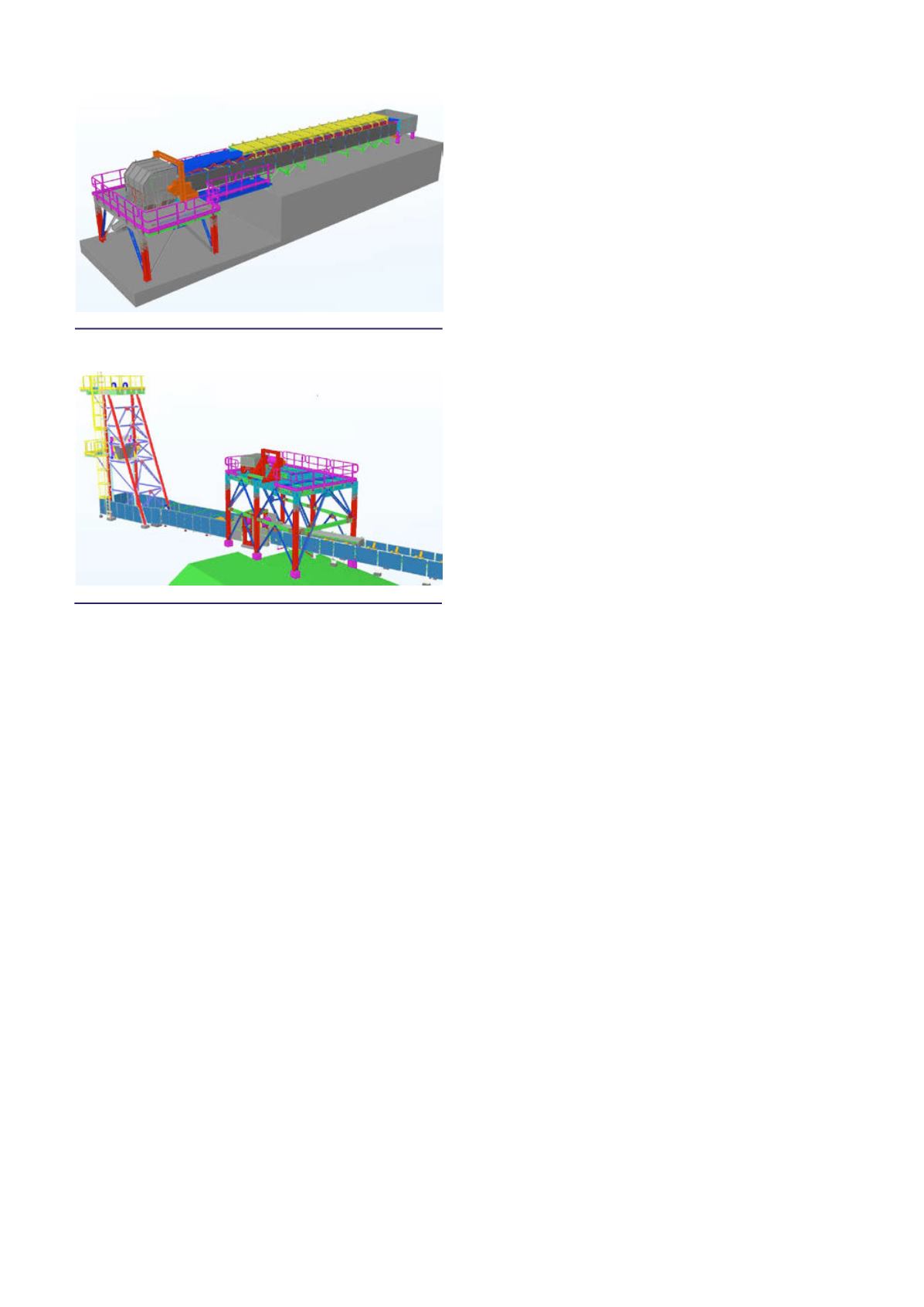
Figure 5. TEKLA modelling of a conveyor take-up
station.
Figure 4. TEKLA modelling of a belt conveyor.


