



 26 / 84

North America 2018
24 \
World Cement
needs, then the potential exists to develop CO
2
for
delivery and use in existing industrial gas markets.
The size of the overall cumulative amount of CO
2
captured during the project was small, but was not the
primary focus of the project. The cement industry focus
on CO
2
capture has thus far been towards
full-scale capture, which will require years of further
development, high capital costs, potentially complex
integration with the cement plant operations, and
downstream solutions for where to put or what to do
with the captured CO
2
.
The project demonstrates a retrofit system that
could be applied immediately, with low capital costs
and paired with an existing utilisation strategy. The
retrofit capture can be operated and scaled up to match
the downstream utilisation needs.
The next target will be to demonstrate longer-term
capture. A study of ongoing operations will identify
barriers to expanded implementation and scale up. The
gas distribution aspect will be considered by creating an
ongoing supply of CO
2
for utilisation.
Future development will see the continued
expansion of CO
2
utilisation options within the
cement and concrete industry, including growth of the
CarbonCure producer network. New CO
2
utilisation
technologies that grow the demand for CO
2
will
be developed and paired with cement industry CO
2
sources.
If the CarbonCure approaches were adopted
globally, an estimated 82 million t of CO
2
could be
utilised per year to achieve a mineralised and avoided
impact of almost 500 million t CO
2
. This has the
potential to exceed the 442 million tpy reduction
attributed by the CSI to the carbon capture and storage
segment. Further CO
2
utilisation approaches for cement
and concrete production could serve to increase the
total CO
2
demand and impact.
8,9
Summary
This project is an important milestone in
demonstrating the viability of a complete supply
chain solution for the cement industry to consume
its CO
2
emissions and improve the commercial and
sustainability competitiveness of its products. The
consortium felt this project was vitally important,
since it demonstrates a low-cost solution that profits
each member of the value chain from cement to
construction. Having a complete and scalable CO
2
solution is essential for the industry to meet its CSI
low-carbon technology roadmap targets, while raising
profits, lowering carbon, and reducing risks.
Rather than relying on yet-to-be-developed fully
integrated full-scale capture and sequestration of CO
2
from cement plants, the project demonstrates that a
utilisation-scaled capture solution is capitally efficient
and immediately scalable. The time value of carbon
is important as emissions are cumulative and there
is a limited amount of time to achieve the required
reductions. Carbon reductions achievable immediately
are more valuable than carbon reductions in the
future.
References
1. HILLS, T., LEESON, D., FLORIN, N. and FENNELL, P., 2016.
‘Carbon Capture in the Cement Industry: Technologies,
Progress, and Retrofitting’,
Environmental Science &
Technology
50 (2016), pp. 368 – 377.
2. BJERGE, L.-M. and BREVIK, P., ‘CO
2
Capture in the
Cement Industry, Norcem CO
2
Capture Project (Norway)’,
Energy Procedia
63 (2014), pp. 6455 – 6463.
3. KLINE, J. and KLINE, C., ‘Cement and CO
2
: What is
Happening’,
IEEE Transactions on Industry Applications
,
vol. 51, no. 2 (March – April 2015), pp. 1289 – 1294.
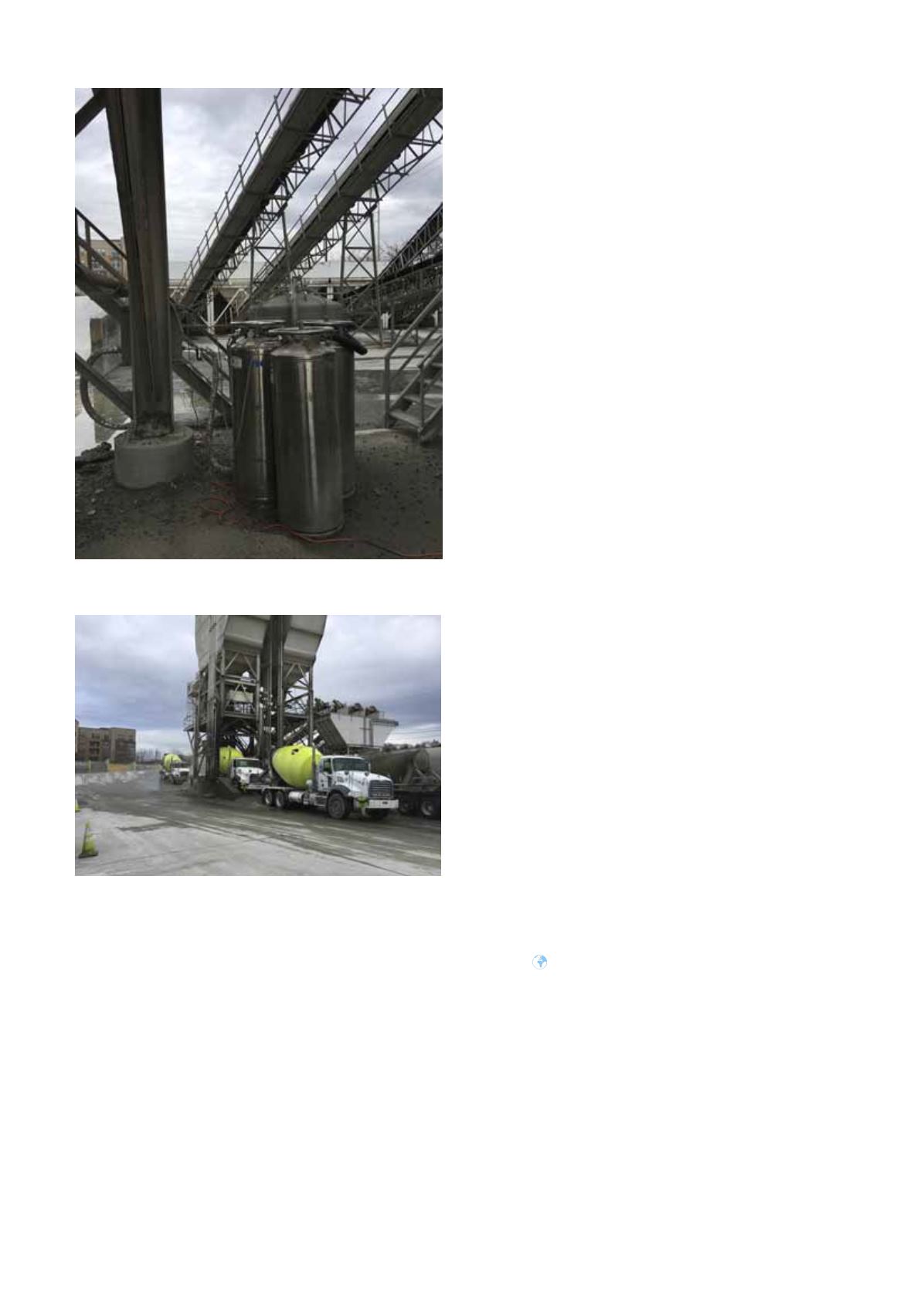
Figure 3. Dewars of liquefied captured CO
2
at the
Glenwood concrete plant.
Figure 4. Concrete production using captured CO
2
at the
Glenwood concrete plant.