



 27 / 108

Further NO
x
reductions, in the event of higher
AF usage, are achieved through the injection
of urea (SNCR), which was also optimised, as
a higher and more uniform temperature was
required as compared with the NH
3
injection.
The success of the project was based on the
simultaneous computing of the combustion
and calcination reactions in order to accurately
define the combustion and calcination regimes
within the calciner. Once the flow and mixing
information under reacting conditions were
calculated, the kiln-generated NO
x
reduction
was achieved through fuel hydrocarbon
radicals breaking-up the stable NO molecule.
The creation of fuel-rich conditions at higher
temperatures (i.e., above 1200ºC), for a short
duration (quarter of a second) is very effective
at reducing both NO
x
and CO generated
earlier in the kiln, in the presence of fuel
radicals which only last for very short time,
and in particular in the presence of higher
oxygen streams, i.e., tertiary air. Beyond
this point, attention needs to be paid to the
mixing of the released volatiles containing
nitrogenous species from the calciner fuel
and the tertiary air interactions, as sudden
mixing of the tertiary air could again generate
NO
x
, whereas a lack of it could produce
CO. An optimum residence time where
thermal deactivation of the char particles
does not take place is found to be between
1.0 – 1.5 seconds, depending on the overall
calciner height, mixing pattern and fuel type.
The identification of the required mixing
conditions in the near burner region for air and
fuel staging (creation of fuel-rich conditions
and subsequent tertiary air reactions with
fuel volatile and char) needs the assistance
of a computational model simultaneously
calculating the combustion and calcination
reactions (i.e., MI-CFD).
The Vasilliko plant has continued its effort
for a more environmentally friendly and energy
efficient operation, utilising all possibilities
of reducing costs without compromising
emissions.
References
1. SKOURIDES I., PETROU S., AKRITOPOULOS
M. P. and ABBAS T., ‘Calciner optimisation for
reducing NO
x
and increasing AF substitution rate’,
Proceedings of 14
th
Global Cemfuels, Cyprus,
19 – 20 February, 2020.
2. AKHTAR, S.S., GOETZ, J., ABBAS, T, and
KANDAMBY, N.H., ‘A Calciner at its Best’, Presented at
61
st
Cement Industry Technical Conference, IEEE-IAS/PCA,
St. Louis, Missouri, April 28 – May 2, 2019.
3. AKRITOPOULOS M. P. and ABBAS T., ‘Calciner
Challenges’,
World Cement
, November 2018,
pp. 35 – 42.
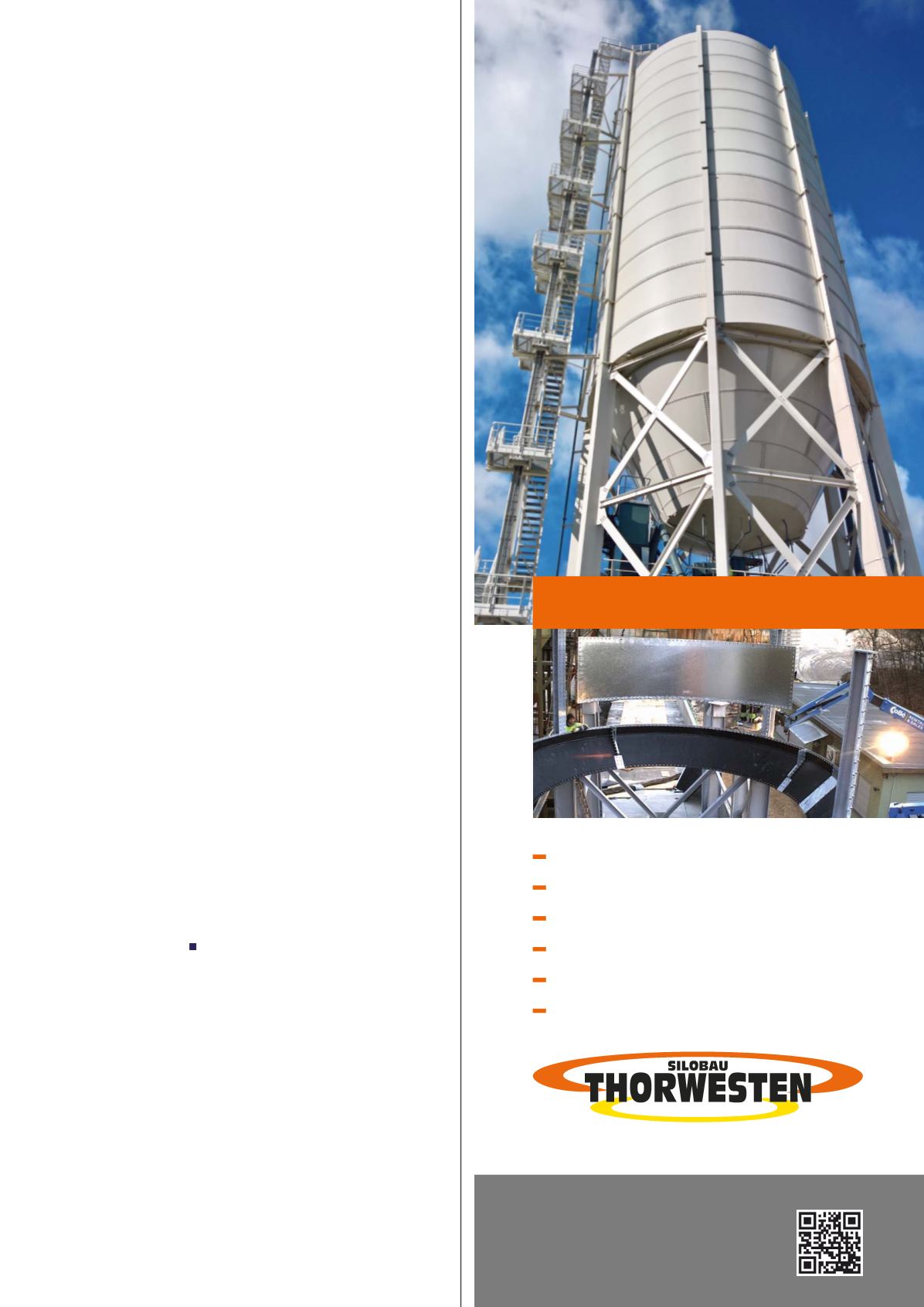
Silos made to measure
bolted bulk material silos
for all kinds of bulk solids
simple and quick installation
short delivery times
comes with complete finish
easy to relocate
The Modern Way
SILOBAU THORWESTEN GmbH
Daimlerring 39, 59269 Beckum / Germany
Phone:
+49 2521 9333-0 sit@thorwesten.com www.thorwesten.com