circumstances become caked with product overnight,
but a slow build-up of product may eventually encase
the valve and render it useless. This risks damage to
the silo through over-pressurisation and jeopardises
personnel Health & Safety.
Dangers of over-pressurisation
Problems with the silo protection system or the
air filtration system will become apparent during
the filling process. Delivery tankers are pressure-
tested vessels typically capable of withstanding up
to 2 bar (29 psi) pressure. By comparison, storage
silos are only designed to withstand the weight of
material stored in them and can rupture at pressures
as low as 1 – 2 psi above atmospheric pressure.
Over-pressurisation during the filling process can
lead to serious or fatal injury to workers and the
public, catastrophic silo damage, loss of material and
production, harmful environmental pollution, and
negative publicity.
Filter housings at the top of the silos are
designed to vent the silo during filling, whilst
preventing dust escaping into the atmosphere.
Normally these are fitted with some form of
self-cleaning system to keep filters clear, typically
mechanical shakers or reverse jet systems. Like
other vital components they require regular checks
and should have scheduled filter replacement, but
in practice it would appear this is rarely the case.
Faulty operation can be caused by a range of issues,
including blockages (as mentioned previously)
and the fitting of unsuitable or wrongly-sized
filters. Most powders form hard compounds when
mixed with water from the atmosphere, further
exacerbating the problems at the top of the silo.
Comprehensive servicing
Considering the risks of neglecting silo safety
equipment outlined above – not to mention the
financial and legal costs that would be incurred –
employing a professional and experienced service
provider to maintain silos and their safety equipment
is not only necessary to comply with key safety
guidance, but also essential for optimising output
and profitability.
Filter units and level probes
Filter units should be assessed on their ability
to vent sufficient volumes of air as laid out in
current guidance. They should be checked for
cartridge integrity and cleanliness, and the cleaning
reverse air jets should be tested. Manufacturer’s
recommendations on filter changing schedules
should be observed, although consideration should
also be given to the frequency of silo filling and
drawing-off as this will affect the cartridge life-span.
The Netherlands | T +3115 369 54 44 |
|
Solid partners for
powder
and
bulk handling components
Optimum performance,
maximum life by using
heat resistant EPDM
and EPM rubber.
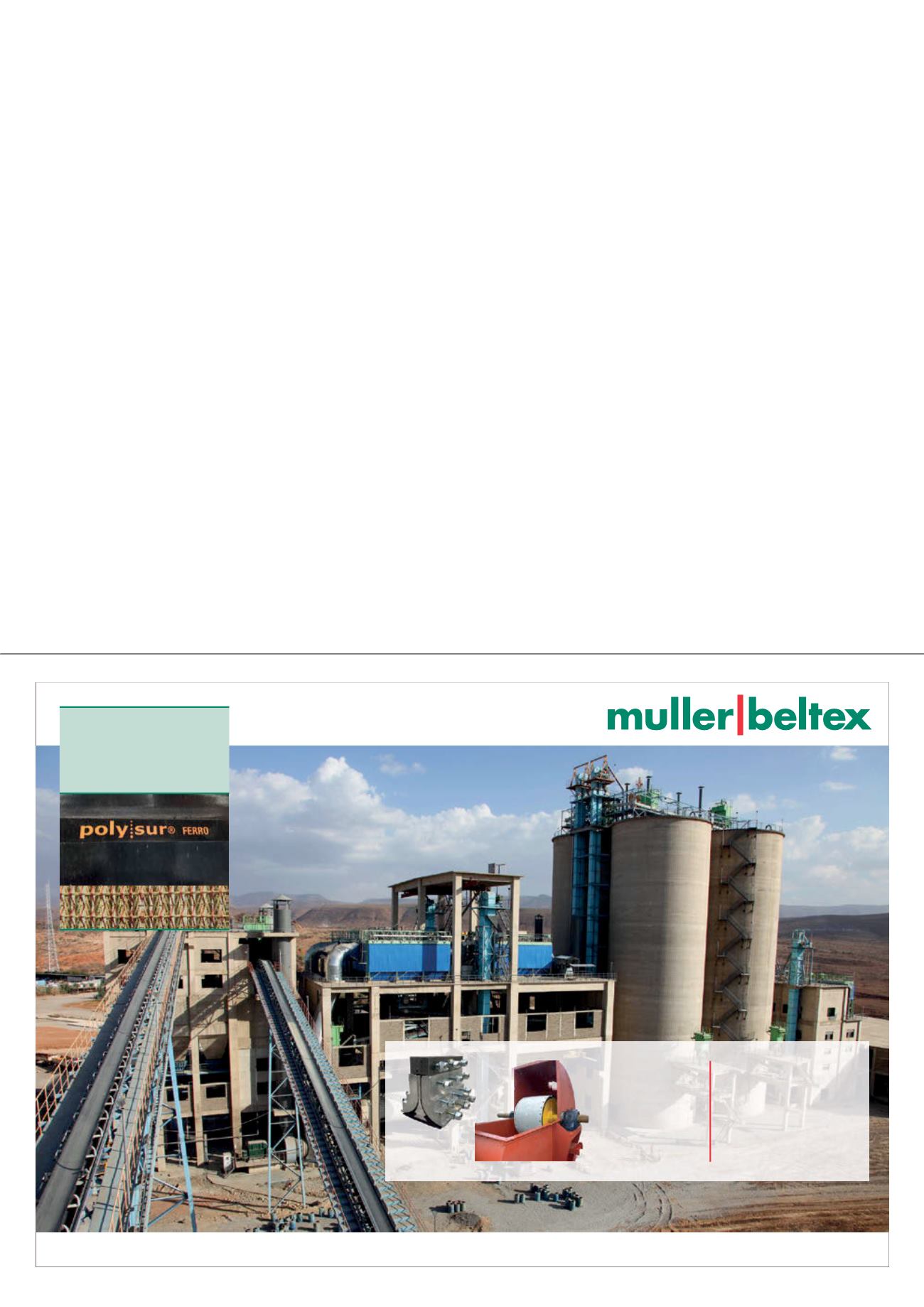
POLYSUR
®
FERRO
ELEVATOR
BELTS
Image: Gavin Houtheusen/DFID
YOUR
SERVICE
&
KNOWLEDGE
SUPPLIER OF
RELIABLE
COMPONENTS
FOR
BUCKET
ELEVATORS


