BMHR 2016
34 \
World Cement
best practice guidelines state that the checks should
be conducted in a routine, scheduled manner in order
to optimise the functionality of the equipment and
pre-empt any impending faults.
Unfortunately the reality is that in most cases
these procedures are often overlooked or worse
misunderstood.
Common faults
Poor silo servicing is relatively easy to spot for the
experienced eye; however due to the ‘out of sight,
out of mind’ nature of safety equipment tucked
away on the top of silos, site personnel may
not realise their scheduled servicing has
been lacking in any way until a fault reveals
itself. Hycontrol engineers have evidence of
‘serviced’ silos which have, in reality, only
been subjected to a cursory visual inspection
and a quick dust-down. This completely
fails to assess the true condition of the vital
components of the protection system. It is
similar to booking a car in for a service but
only receiving a valet.
Common faults encountered on a daily
basis include:
l
l
Filter cartridges in a damaged and
neglected state, often completely blinded
by powdered product. These pose the
risk of emission issues if they burst, or if
they are completely blocked they have
the potential to cause serious damage to
the silo. There have been several recorded
incidents of blocked filter housings being
blown clean off silo roofs by pressure
build-up – and the dangers of heavy metal
objects being thrown from height into
busy work-yards or quarries do not need
explaining.
l
l
Pressure relief valves that, while dusted
off on top, have not been pressure-tested
or even had the lid removed to clean the
valve. Frequently these valves have become
blocked with product blown out of the
silo (typically due to blockages in the filter
or uncontrolled filling procedures). In one
recent case, Hycontrol engineers found
large deposits of moss growing underneath
the lid of a PRV that had just been
‘serviced’ the previous week.
l
l
Powdered product on top of the silo.
Besides the obvious pollution issues,
this is a clear sign that there is a fault
somewhere in the protection system.
Steps should be taken to establish the
root cause of this, but it is frequently
ignored.
l
l
Pressure sensors and PRVs that fail to
operate at the correct set points. Problems
like this are impossible to diagnose
visually and require physical testing.
Whilst it has not historically been possible
to test this equipment in situ, modern
service techniques and pressure-testing
technology mean that there is no longer a
valid reason to neglect this.
Reasons for ineffective servicing can include:
lack of experience, insufficient understanding of
the importance of silo protection equipment and
how the individual components work together, and
simple reluctance to climb high silos in poor weather
conditions to carry out regular weekly checks.
These issues will almost certainly lead to problems
accruing over time. A PRV will not under normal
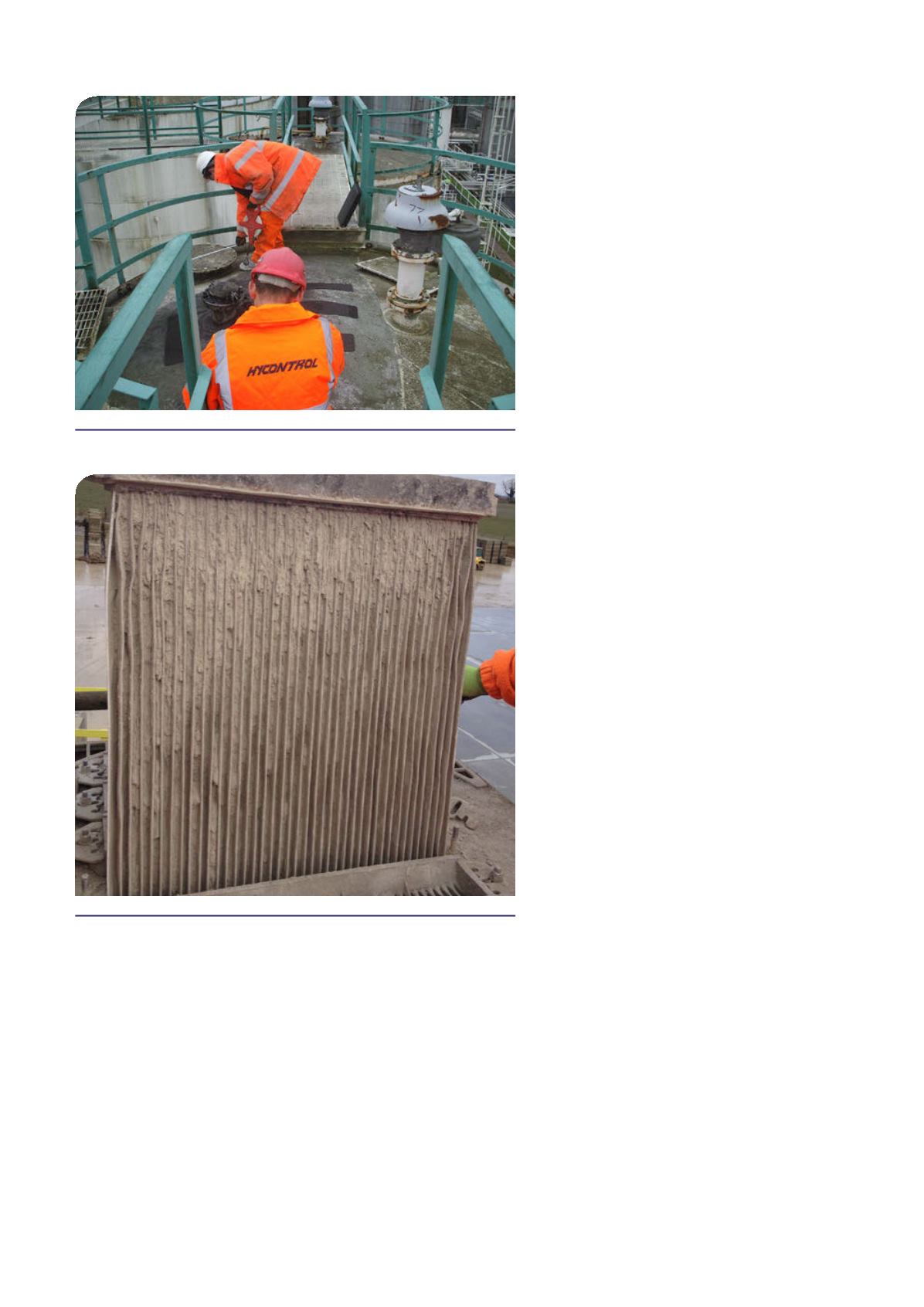
Hycontrol engineers inspecting a silo.
Blocked filter cartridges are a common problem.


