


 44 / 84

North America 2018
42 \
World Cement
with its community and cemented itself as an
environmental and sustainable beacon.
Production processes
Nissan Smyrna is a lasting example of the collaboration
between old and new technologies. “In the
manufacturing environment at Nissan Smyrna, we
interface with older machines dating back to the
opening of the plant, as well as Internet of Things
(IoT) devices that use the latest technologies, providing
information for immediate action.” said Parul Bajaj
of Nissan’s corporate communications. As a result
of the plant’s changing product lines and business
requirements, the manufacturing systems have
been purposely installed to possess a high degree of
flexibility.
Nissan Smyrna uses systems that provide
scheduling, data for processes, machinery, and
robots. “These systems ensure product tracking in
order to sequence the vehicles, engines, doors, and
other component parts in a just-in-time delivery for
assembly,” Bajaj added. Multiple levels of automation
from robots, guided carts for parts delivery, and
automated vision systems are integrated to ensure
quality achievement. These systems work together
to provde a real-time view of the plant to ensure
optimum production levels.
The growth of new technologies and IoT is
intrinsically linked to the growth of the Nissan Smyrna
plant. “Technologies, as entry prices reduce, are
entering new areas of automation,” Bajaj stated. “For
example, collaborative robot use is on the rise in the
industry, where a person and a robot can work in the
same vicinity.”
As with other automotive and manufacturing
industries, such as cement, new device connectivity,
using inexpensive IoT platforms, will pave the way for
new data collection methods, statistical analysis, and
affirmative action.
Nissan Smyrna launched its paint plant in 2013,
utilising a three-wet technology that allowed it to
capture significant energy savings, while continuing
to maintain and even exceed customer expectations.
Three-wet technology replaces a multiple stage,
heavy-duty oven-heated process, by allowing the
primer, base coat, and clear coat, to be applied
simultaneously and wet. “This three-wet method
enables us to minimise the plant footprint and
streamline throughput,” stated Bajaj. “We were then
able to install compact paint booths with continuous
recycled process air, eliminate one oven from the
conventional process, and heavily utilise variable
frequency drives to maximise energy savings.” Nissan
Smyrna has also launched new materials that allow it
to further optimise energy savings and environmental
impact, including a low-temperature pre-treat
system and an all waterborne basecoat and primer
technology.
“In 2016, we were the first North American plant
to launch the latest 2K clearcoat technology, which
improved our starch resistance by 40%,” Bajaj added.
Through these environmentally sustainable activities
and changes, the plant has seen a 30% reduction
in energy consumption, a 30% reduction in CO
2
emissions, and a 70% reduction in volatile organic
compound emission, while maintaining the high
quality of product expected by its customers.
ENERGY STAR
Nissan North America became an ENERGY STAR
partner in 2006 and has achieved Partner of the
Year status for the last eight years. The ENERGY
STAR rating is a national symbol for protecting the
environment through superior energy performance.
The Nissan Smyrna plant has achieved and maintained
ENERGY STAR plant certification since 2006, meaning
it is more energy efficient than three out of four of
its peers.
“We have achieved these recognitions by
developing a sustained energy management
programme built on the principles of the ENERGY
STAR guildelines for energy management,” said
Nissan Rogue production is underway at the
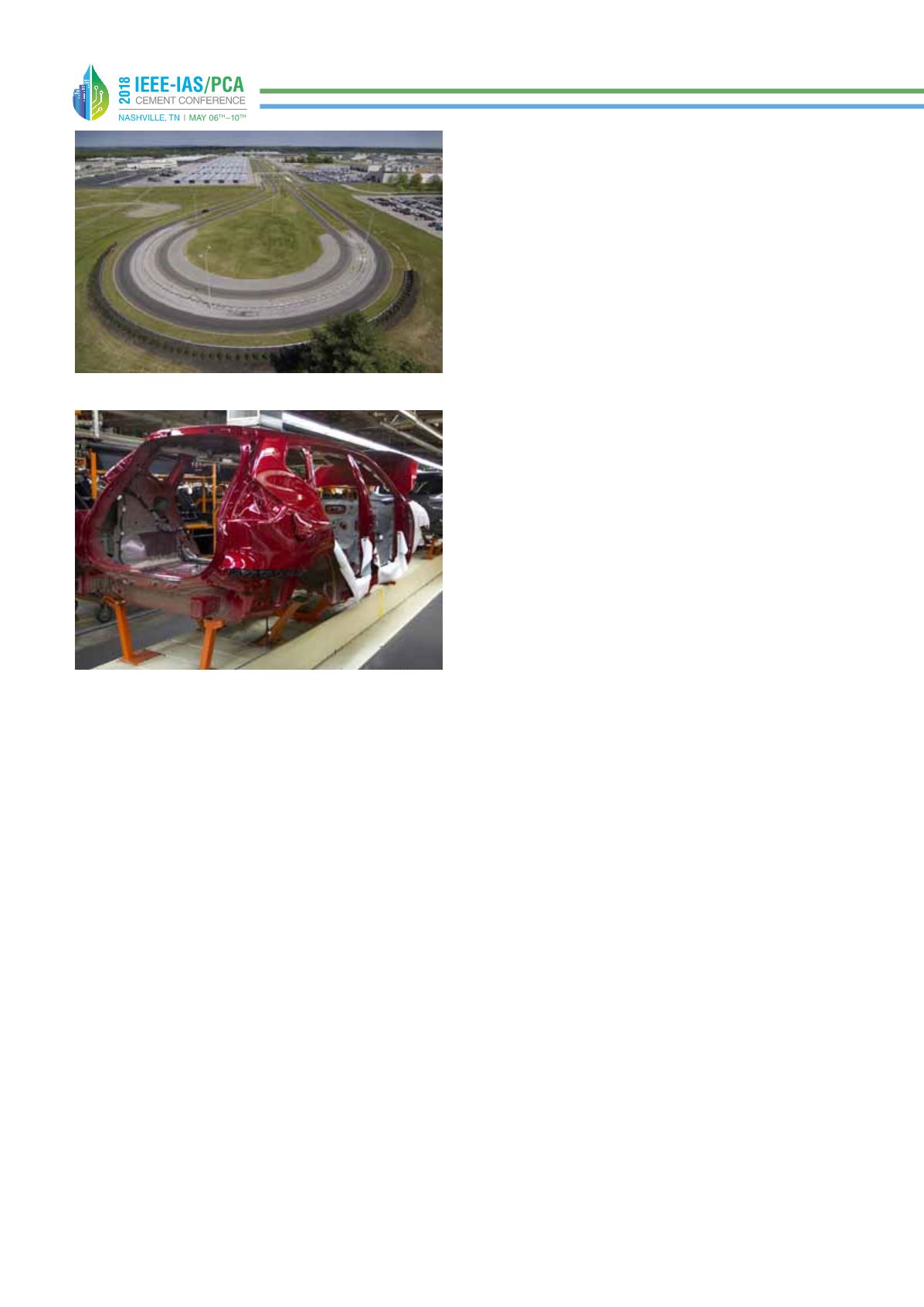
Nissan Smyrna Vehicle Assembly Plant in Tennesee.
The Nissan Smyrna Vehicle Assembly Plant in Tennessee.