


 76 / 140

November 2018
74 \
World Cement
In a typical dense phase system, the delivery of the
cement to the top of the silo uses the relatively simple
schematic of having the correct valve open and other
associated valves in the system closed, so that cement
diverts into the correct silo. However, anything that
is pneumatically conveyed is abrasive and can wear
the piping and valves in this system. The valves at the
top of the silo may only have pressures of 1 – 2 bar
because much of the pressure has dissipated by the
time it reaches the top of the silo. The pressure is not
difficult for most valves, but the abrasion is extremely
demanding. If the valves in this area do not seal well,
then a typical cement plant runs the risk of expensive
silo contamination.
Finding the best valve for dense phase
feeding
Finding the correct valve for silo isolation, diverting,
and tight shut off to prevent silo contamination is
worth examining. There are several types of valves
used in this area. Some of the most common are knife
gate valves, two-way diverter valves, and pinch valves.
A reasonable size cement plant may have 200 mm,
250 mm, and 300 mm valves on the top of its silos.
Knife gate valves are used in this area, but one of the
common problems with a knife gate is that, when
the valve is closed, a metal gate is forced down into
a wedge to shut off the valve. The valve may have
EPDM, NBR, or other rubber O-ring, or perimeter seals
to provide tight shut off. When the valve is new, it may
perform well, isolating the dry cement. However, when
this seal begins to wear, the gate may allow a very
small amount of leakage. Unfortunately, when there
is a small leak in this valve, with the abrasive nature of
cement, the small leak becomes larger over time. The
metal gate experiences abrasive particles travelling past
the gate and wearing it out. A gate that was perfectly
square in the beginning can begin to look like a picket
fence as it wears. The body may also face this erosion
of the metal and the entire valve may require complete
replacement. Its ability to isolate is completely lost over
time. One of the advantages of this type of valve is low
cost, but the survivability is not very good.
Another option is a diverter valve. This type of valve
will have one common port and two outlets. Inside the
valve, there will be a metal disc and seats that can be
switched to change the direction of flow from one port
to the other. These valves, like the knife gates, can be
operated manually, electrically, or pneumatically. In
many cement plants, the valves at the top of the silo are
manually operated. The seats and disc are hand lapped
to provide tight sealing. Due to the abrasive dry cement
powder, the operation or switching may sometimes be
physically straining for plant personnel. Owing to the
metal’s exposure to the cement, the internals may wear
annually and need to be replaced. Some repairs can be
done onsite but others may require the valves being
sent out for repair. Some cement producers experience
valve repair costs as high as 70% of the cost of a new
valve, depending on the extent of the repairs required.
A pinch valve is a good option for this service. This
type of valve has a rubber sleeve that the cement
travels through. This rubber sleeve isolates all the metal
operating components from the abrasive cement.
The rubber sleeve is the only part that touches the
cement. As it is operated, two pinch bars squeeze the
rubber sleeve on the valve centre line and the sleeve
completely isolates the flow of cement. The pinch
valve offers a cost-effective repair: simply remove the
rubber sleeve, insert a new one, and the valve is back in
operation. Very rarely are any other components on the
pinch valve in need of repair. Typically, the pinch valve
sleeve lifetime is several years, typically outlasting both
knife gate and switching valves before they need to be
repaired. Two pinch valves will be required to do the
work of one switching valve but the price of the two
pinch valves is typically less than that of one switching
valve. The other aspect of a high-quality pinch valve is
that the valve is very easy to operate. If it is operated by
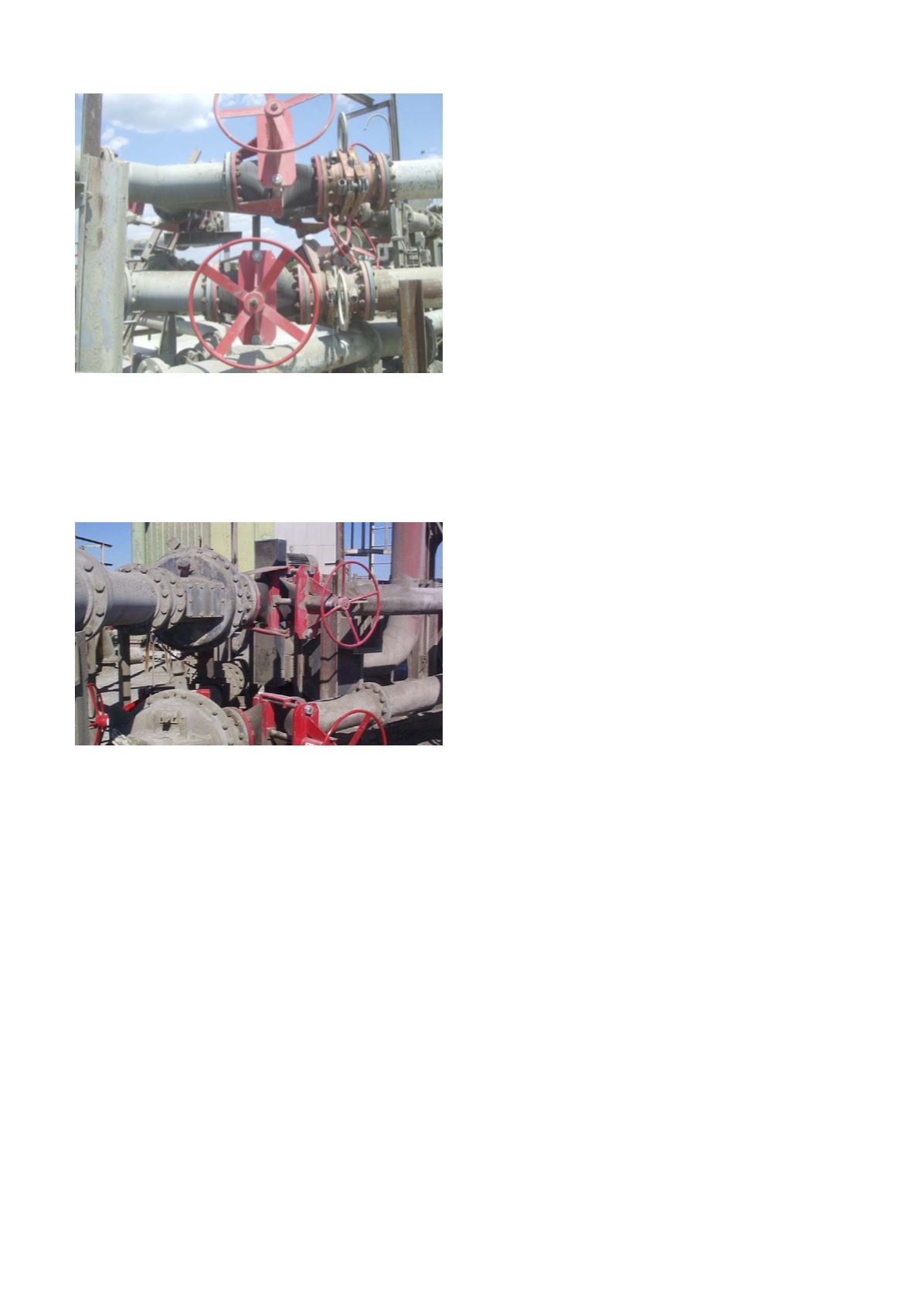
Flowrox open body pinch valves. These valves are in
the closed position with the rubber sleeve completely
squeezed shut. When the sleeve fails it starts as a pin
hole leak and gradually gets worse. Some cement plants
choose an enclosed body design, which does not allow
leakage to the external environment. The open design
is lighter and less costly than the enclosed design.
Flowrox valves directly attached to the outlet of diverter
valves. Flowrox valves allow flow or isolate the cement,
depending on the open or closed position.