BMHR 2016
20 \
World Cement
in a viscous damper and the movement is converted
into an electrical signal for integration.
Accuracy in cement manufacturing
The accuracy of an installed flowmeter system will
depend primarily on the product being handled and
the feed system to the flowmeter. The flowmeter relies
on a constant velocity of impact, so it is essential that
materials are always dropped from the same height.
In the cement industry and with similar material,
accuracies of around ±0.5 to ±1.0% are fairly common.
Table 2 shows typical results of linearity tests carried
out at the factory. Table 3 shows the results of tests
carried out on a system where a screw conveyor was
being used to feed cement to a flowmeter.
What does this mean in the field?
Setting our sights beyond the physics classroom, let’s
see how all of these equations are being put to work.
Take St. Marys Cement in Ontario, Canada.
In every way, St. Marys is a modern cement
production facility, with an output of approximately
1.2 million tpy of Portland cement. Automation, along
with instrumentation, controls and maintains processes
throughout the plant.
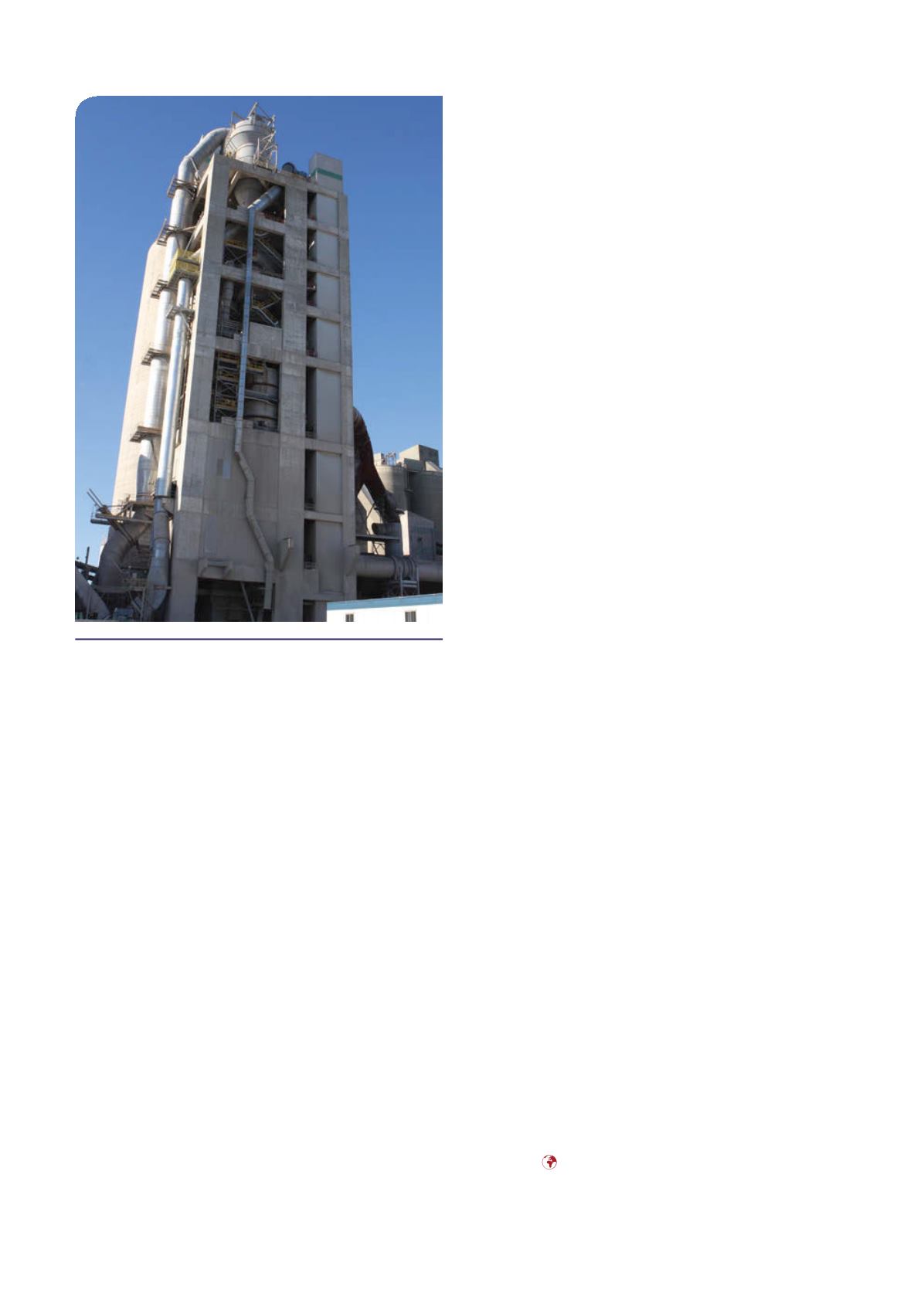
Figure 5. The cement industry is an ideal application
for solids flowmeters due to the process conditions
and plant layouts over several stories.
St. Marys has depended on Siemens weighing
technology for more than 30 years. And in many cases,
the company has depended on the very same weighing
devices that were installed 30 years ago.
St. Marys uses the E-300 solids flowmeter with an
ILE-61 sensing head to monitor the coarse returns
of the finish mill below the separator. Both devices
are still offered by Siemens as the SITRANS WF330
flowmeter and SITRANS WFS320 sensing head: new
names and colors – but precisely the same design and
high degree of functionality.
As stated earlier, impact flowmeters like
SITRANS WF330 have several distinct advantages over
other types of flowmeters. First, these devices can
handle very low to very high flow rates – ideal for
monitoring the finish mill’s coarse returns. Secondly,
their accuracy and repeatability are not affected by
material buildup on the sensing plate, as we saw
above, since only the horizontal force of impact
deflects the sensor. Any additional weight that results
from material sticking to the plate does not shift the
output of the system.
Also decades ago, technicians installed a
COMPU-FLO integrator, which was then replaced
by a COMPU-M integrator. As time progressed,
St. Marys replaced this device with the Milltronics
SF500 integrator. The Milltronics SF500 offers
online calibration as well as standard industrial
communications protocols like Modbus, Devicenet, and
Profibus DP.
With this combination of flowmeters and
integrators from Siemens, plant operators receive
precise rate-of-flow measurements instantly without
having to interrupt the flow of material – a definite
plus for busy Portland cement plants like St. Marys.
The physics of reliability
Now that you’ve taken a peek behind the curtain to
see the physics on which a solids flowmeter is based,
these devices may no longer seem so mysterious – or
perhaps they are now even more mysterious.
We know, however, that it’s really not about the
math – it’s about providing a reliable measurement for
process control and quality. What appear to be, at first
glance, somewhat unsophisticated devices are actually
vital components for producing Portland cement.
Anywhere the flow of material needs to be measured,
solids flowmeters are there: from mill recirculating
loads as discussed above to kiln dust monitoring,
loadout to trucks, rail or ships, and measuring kiln
feed.
But take it from someone who walks past these
devices every day: when speaking about the weighing
devices installed throughout St. Marys Cement,
Electrical Supervisor Kevin Hodgins simply states:
“They just work.”
They certainly do—and now you have the maths to
prove it.


